
Choosing the Right Mattress Vacuum Cleaner for Your Home
A practical guide to selecting a mattress vacuum cleaner by pickup design, filtration, hygiene features, comfort, maintenance, and long-term value.
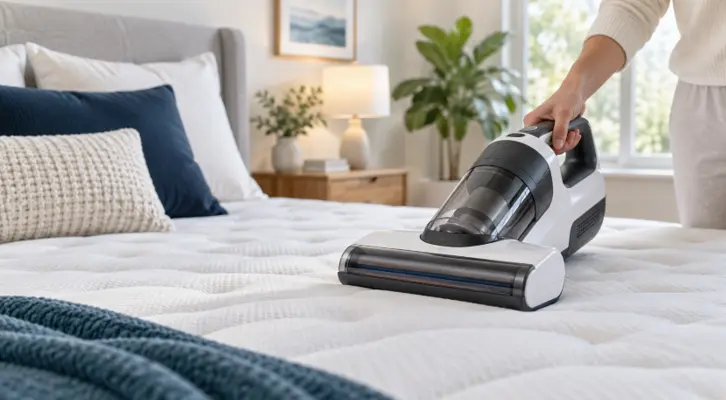
Image disclosure: Images and scenes in this article may be AI-generated for illustration purposes only. Any people, animals, places, products, interfaces, or events shown are fictional or generic and should not be interpreted as actual individuals, locations, commercial products, software interfaces, testing results, or real-world events.
Introduction
A mattress vacuum cleaner—also marketed by some sellers as a bed vacuum—can help collect dust, lint, hair, and other loose material from mattresses and upholstered furniture. It should not be treated as a machine that automatically sterilizes a bed. In a Philippine home, where humidity, open windows, pets, and frequent electric-fan use can affect how quickly dust settles, a tool that is comfortable and easy to clean is more likely to be used regularly. Begin with pickup design and dust containment, then judge UV-C, warm air, and sensors as secondary features that need credible documentation.
At a Glance: Key Factors to ConsiderFactor | Why It Matters | Quick Tip |
Suction and Agitation | Mattresses hold fine dust in textured fabric. | Prioritize balanced pickup and a usable cleaning head. |
Filtration and Dust Containment | A high-grade filter is less helpful if dusty air leaks around it or emptying the bin releases debris back into the room. | Choose a system you can maintain correctly. |
UV-C, Heat, and Hygiene Claims | Some mattress vacuums add UV-C light or warm air, but these features do not automatically prove that the machine sterilizes a mattress, kills dust mites, or eliminates bed bugs. Vacuuming may prevent exposed dust mites and debris if used regularly , but hidden pests usually require a broader control plan. | Prioritize dependable suction and agitation. Treat UV-C and heat as secondary features unless the exact model has credible evidence showing the required exposure, temperature, and results. |
Weight, Cord, and Ease of Use | A heavy or awkward unit can tire the wrist and discourage regular use. | Choose the lightest comfortable model that still feels stable on the fabric. |
Cleaning, Maintenance, and Warranty | Clogged filters reduce airflow, wrapped fibers slow the brush, and unavailable replacements can shorten an otherwise useful appliance's life. | Prefer tool-free routine maintenance and filters you can actually buy. |
Detailed Buying Factors
- Suction and Agitation
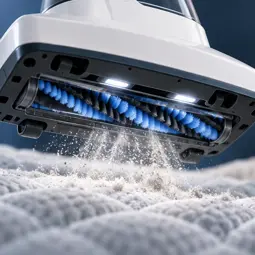
Suction moves loosened dust into the bin, while a powered brush or tapping mechanism agitates the fabric surface.
Mattresses hold fine dust in textured fabric. Strong airflow is useful, but contact design and steady pickup matter more than one impressive number.
Check whether the head maintains contact on soft fabric, whether the brush can be cleaned, and whether independent demonstrations show even pickup without snagging.
Our view: Prioritize balanced pickup and a usable cleaning head. Treat wattage, pascals, and RPM as clues.
- Filtration and Dust Containment

The filter captures particles carried by the airflow, while seals and the dust-bin design help keep collected material contained.
A high-grade filter is less helpful if dusty air leaks around it or emptying the bin releases debris back into the room.
Before buying, Look for a clearly stated filter type, a sealed airflow path, easy bin removal, replacement-filter availability, and instructions for washing or changing filters.
For most homes, Choose a system you can maintain correctly. If allergy control matters, favor credible filtration claims and low-dust emptying over vague “purification” language.
- UV-C, Heat, and Hygiene Claims
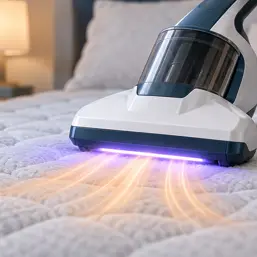
Some bed vacuums add UV-C lamps, warm air, or both. Their effect depends on design, exposure, distance, surface contact, and safe operation.
These features can sound reassuring, but they do not automatically prove that a quick pass sterilizes a mattress or eliminates dust mites.
Regular vacuuming may help reduce exposed dust mites and debris, but pests hidden deep within the mattress usually require a more comprehensive control approach.
Check Read the manual and test evidence for the exact model. Check for a contact or tilt sensor that switches the lamp off when the head is lifted, and avoid direct eye or skin exposure.
Our recommendation is simple: Buy first for dependable vacuuming. Consider UV-C or heat only as a documented secondary feature, never as a substitute for washing bedding or following health guidance.
- Weight, Cord, and Ease of Use
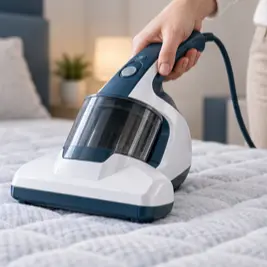
Weight, grip angle, head width, cord length, controls, and noise determine how comfortable the cleaner is across a full mattress.
A heavy or awkward unit can tire the wrist and discourage regular use. A short cord may require extensions or frequent outlet changes.
If possible, confirm Compare total weight, handle clearance, cord reach, head width, noise information, and whether controls are easy to use while moving the unit.
A practical rule: Choose the lightest comfortable model that still feels stable on the fabric. Make sure the cord reaches both sides of the bed safely.
5. Cleaning, Maintenance, and Warranty
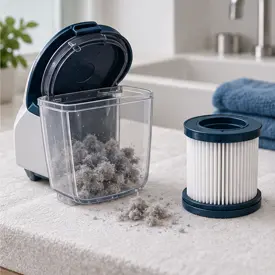
The dust bin, filter, brush, intake, and sensors need regular care. Warranty and local parts support affect the cleaner's long-term value.
Clogged filters reduce airflow, wrapped fibers slow the brush, and unavailable replacements can shorten an otherwise useful appliance's life.
For Philippine buyers, check Check how the bin opens, which filters are washable, drying times, brush access, replacement-part prices, warranty length, and authorized service options.
For long-term value, Prefer tool-free routine maintenance and filters you can actually buy. Follow the manual, and never reinstall a washable filter before it is fully dry.
Recommended by Use Case
For routine mattress and sofa cleaning. A comfortable grip, useful head width, straightforward bin, and cord that reaches both sides of the bed will matter every time you use the machine. Fancy hygiene features come second.
For homes with pets. Give extra weight to brush access, hair removal, dust containment, and replacement-filter availability. A powerful machine is less convenient if cleaning the roller becomes a separate chore.
For households concerned about allergens. Look for clearly documented filtration and a dust bin that can be emptied without releasing too much collected debris. Mattress vacuuming can support regular bedding care, but it is not a medical treatment and cannot guarantee the removal of dust mites or allergens.
Common Mistakes to Avoid
Assuming a high wattage or suction figure guarantees better mattress cleaning.
Treating UV-C or heat marketing as proof that a brief pass sterilizes the mattress.
Ignoring seals, filter availability, bin-emptying mess, and brush maintenance.
Using the cleaner on wet fabric, delicate materials, or surfaces not approved in the manual.
Buying a heavy model without checking grip comfort, cord reach, storage space, and local warranty support.
Frequently Asked Questions
Yes, if the vacuum manufacturer approves the attachment and the mattress maker permits vacuuming. A dedicated mattress vacuum may be easier to move across fabric because of its wide head, agitation, and flat contact, but a suitable upholstery tool can still collect routine surface debris.
Frequent vacuuming may reduce surface dust mites and debris, although pests hiding beneath the surface often need a more thorough control strategy.
There is no universal schedule. Consider household dust, pets, sensitivity, mattress-care instructions, and how quickly debris accumulates. Follow the appliance and mattress manufacturers' guidance.
Corded models provide continuous operation and are common in this category. Cordless models may be easier to move, but compare battery runtime, charging time, replacement-battery availability, and whether suction remains consistent.