
Choosing a Lightweight Jacket for Rainy Days and Cool Rooms
Compare rain shells, windbreakers and light indoor layers, then choose the jacket that suits your commute, comfort and packing space. Decide whether rain protection or indoor comfort matters most.

Image disclosure: All images in this article are AI-generated illustrations. Any people, products, interfaces, places, or scenes shown are fictional or generic and do not depict real individuals, specific commercial products or retailers, actual software interfaces, test or medical results, camera samples, or real-world events.
Introduction
You may feel warm on the walk to a station and chilly after an hour in an air-conditioned office or classroom. Add an afternoon shower, and choosing one jacket for the whole day becomes less straightforward.
Decide which problem matters most: staying dry outdoors or feeling comfortable indoors. A lightweight rain shell and a soft indoor layer do different jobs. One jacket may cover your routine, but a small umbrella plus a separate light layer can sometimes be the more comfortable combination.
Buying Factors
Factor | Why it matters | What to check |
|---|---|---|
Main use | Sets the right type of layer | Rain exposure, wind or indoor chill |
Rain construction | Water can enter through several points | Fabric claim, seams, hood and front closure |
Fit | Room for your usual outfit | Shoulders, sleeves, movement and length |
Ventilation | Comfort during warm wet walks | Opening adjustments and vent details |
Packing and care | How useful it is day to day | Folded bulk, pocket space and washing instructions |
Decide Which Job Comes First
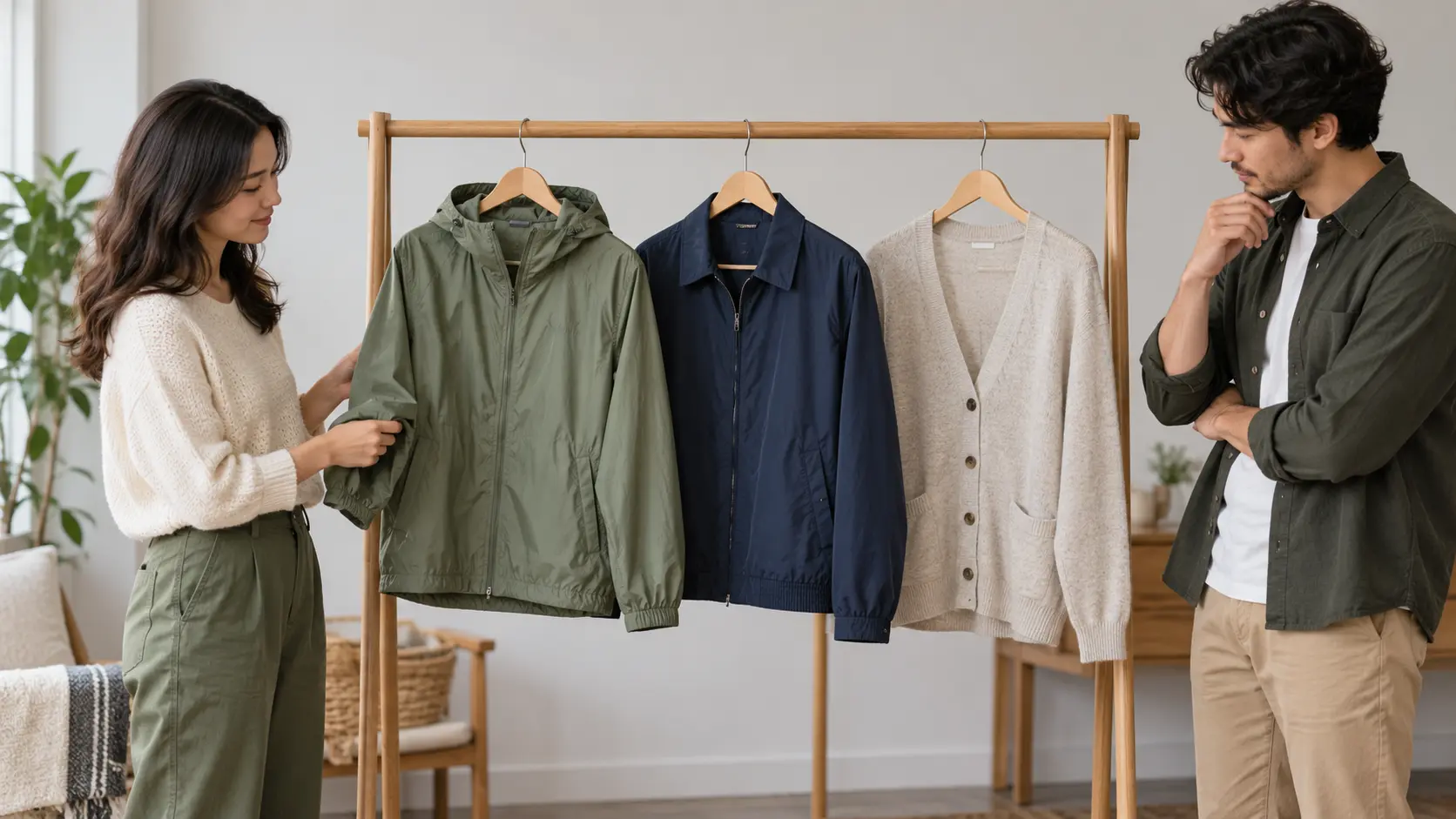
Think about how much time you spend in rain compared with cool rooms. If your outdoor walk is short and usually covered, a soft cardigan or casual light jacket with an umbrella may be enough. If you regularly walk in sustained rain, investigate a proper rain shell rather than assuming any thin jacket will protect you.
A jacket for indoor warmth may have a soft lining and no rain protection. A thin shell may block rain and wind but provide little insulation by itself. Choose around the conditions you actually meet and the clothes underneath. Two compact pieces can be useful when one jacket feels too warm outdoors and too clammy indoors.
Read the Rain Protection Claim
Water-resistant jackets can help with brief light rain, but they are not automatically suitable for a long downpour. Waterproof designs need construction that limits entry through the fabric and seams. Check the manufacturer’s description of the exact model, including seam sealing and the intended conditions.
Water beading on the outside can reflect a water-repellent surface finish; it does not by itself establish that the jacket is waterproof. Look at the front zipper and pocket openings as well. Avoid treating a seller’s demonstration or a dramatic waterproof label as enough evidence without the construction details.
Check Hood Cuffs and Ventilation
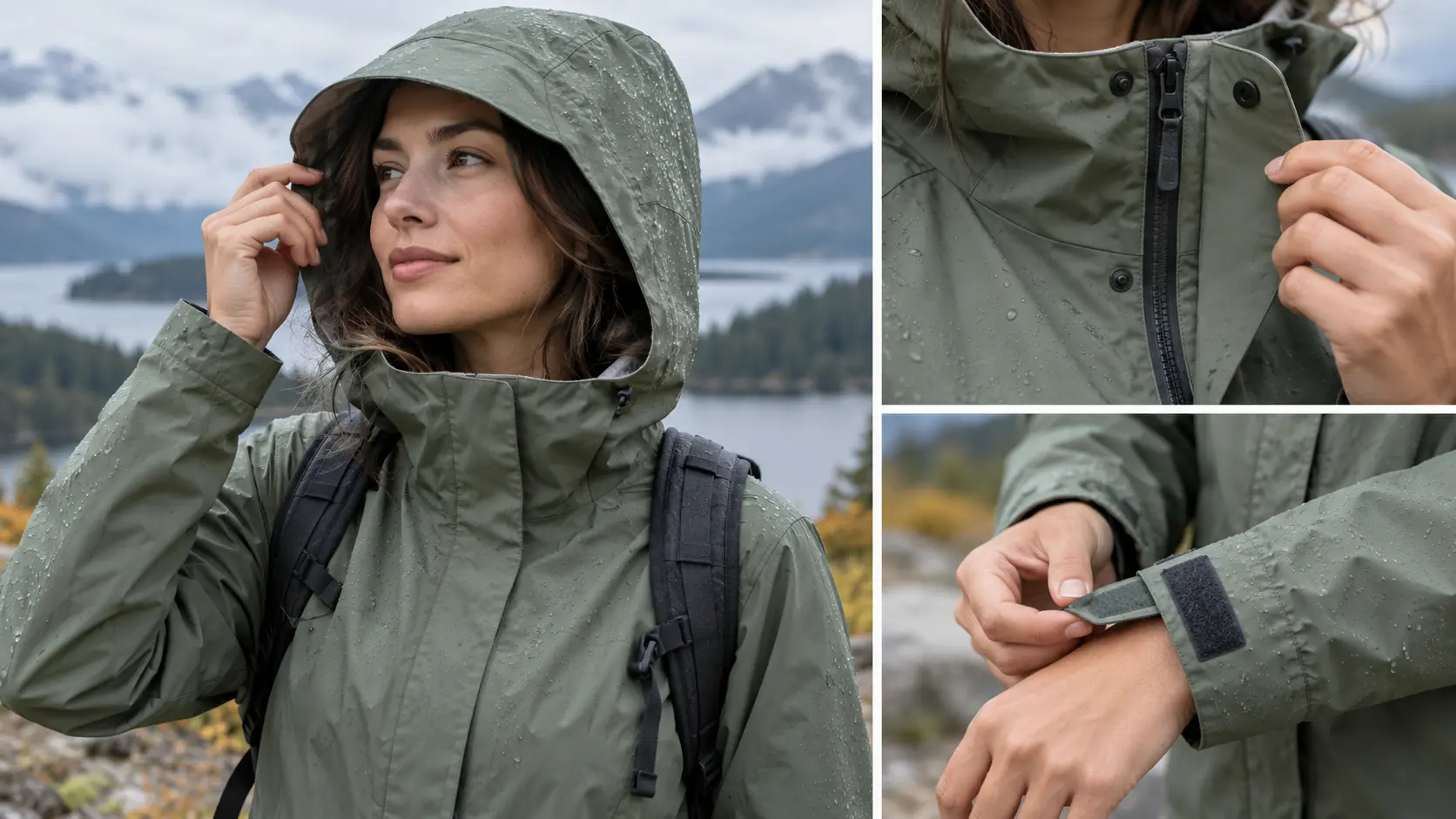
Try the hood and turn your head. It should remain useful without blocking your view or slipping over your eyes. Check whether it adjusts, whether the brim helps shield your face and whether it stores comfortably when you do not need it. A jacket without a hood may suit umbrella use but leaves more responsibility to the umbrella.
Cuffs and a hem adjustment can change how much rain or air gets through openings. Ventilation also matters during a warm walk: some jackets have underarm openings or other vents. A breathable label cannot promise that you will stay sweat-free in humid weather. See whether you can loosen or open the jacket comfortably as conditions change.
Try It Over the Clothes You Wear

Put the jacket over your usual shirt, blouse or uniform. Reach forward as if holding a bag strap, lift your arms and sit down. Check pulling across the shoulders, sleeve length and whether the hem rises more than you like. A jacket that looks fitted in a photo may be too restrictive over your daily outfit.
Leave the room you need for any extra layer without choosing so much volume that sleeves and fabric become awkward on a commute. Check the zipper with the jacket on. For a rain shell, consider whether the length provides useful coverage; for indoor wear, notice how the lining and collar feel against your skin.
Check Packing Space and Small Details
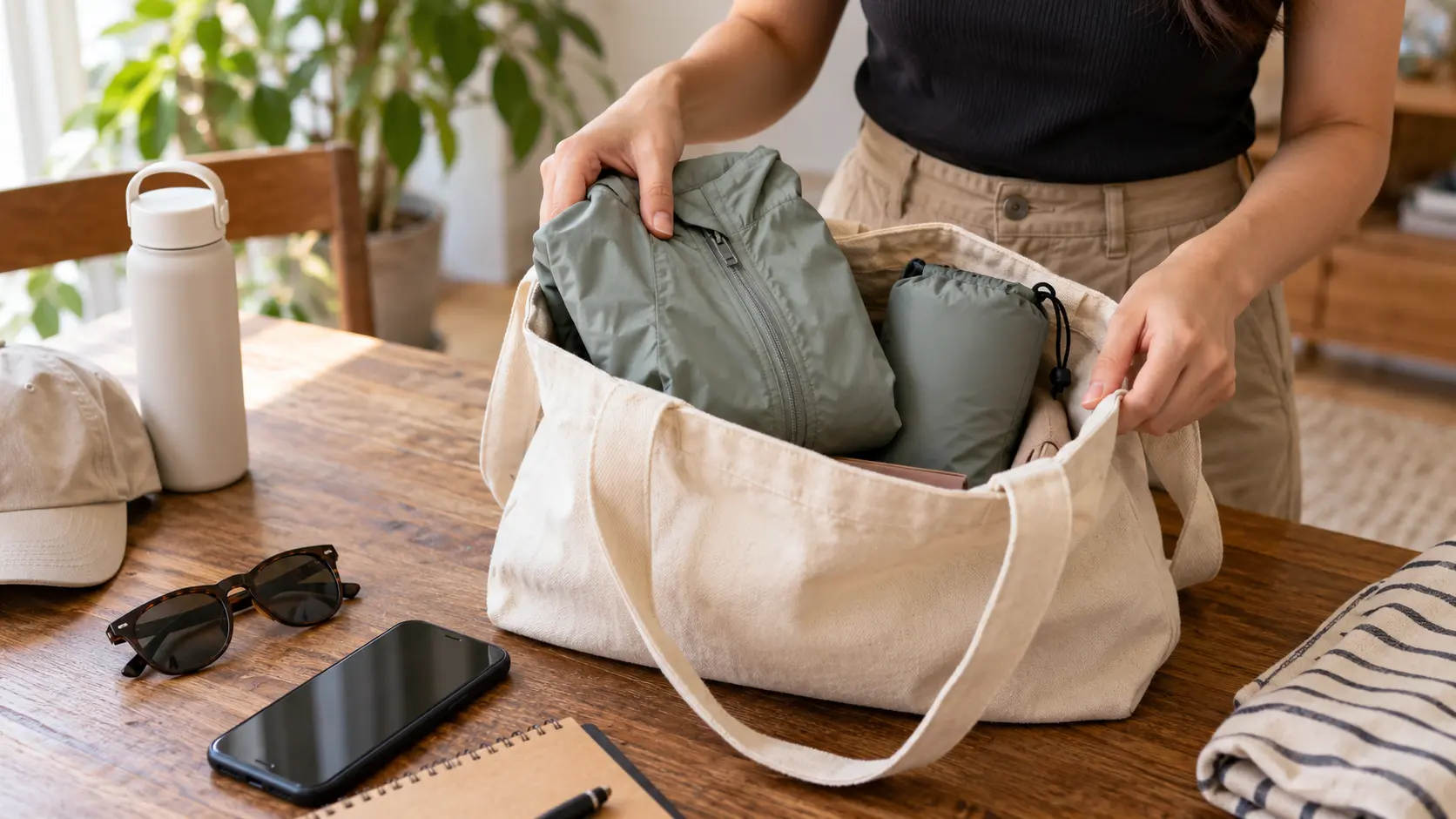
Packability matters if you plan to carry the layer all day.
Fold the jacket or use its storage pouch if one is included. Consider whether you would actually carry it in your work bag, especially when the bag already holds a laptop and lunch. A very compact design may omit pockets or feel less substantial; decide which trade-offs are worth it for your routine.
Try the pockets with the items you expect to carry. A pocket zipper helps retain a card or key but does not prove the pocket is waterproof. Keep sensitive devices protected separately. Avoid sealing a wet jacket in a pouch for a long period; open it and dry it according to its instructions when you reach a suitable place.
Choose Materials You Can Care For
Check the care label, especially on coated or membrane-based rainwear. Washing, drying and maintenance differ from a casual jacket or cardigan. Some water-repellent finishes require care or renewal over time, but use only the treatment and method the maker recommends for the garment.
Look at seams, zipper movement and lining before purchase. A thicker fabric is not automatically better for a lightweight commute layer, and an expensive membrane is not necessarily needed for short covered trips. Compare the full ownership cost, including any special care, with how frequently you expect to use the jacket.
Check Indoor Comfort and Buying Terms

A comfortable indoor layer may suit cool rooms better than a rain shell.
For indoor wear, notice whether the lining and collar feel comfortable after a few minutes and whether you can sit without extra bulk. When buying online, compare chest, sleeve and length measurements from the specific product. Check whether the size chart gives body or garment dimensions and whether the fit is intended for layers. Look for details on the hood, lining, seam sealing and care rather than relying on photos alone.
Priorities for Your Routine
Routine | Give extra attention to |
|---|---|
Mostly air-conditioned rooms | Soft light layer that feels comfortable indoors |
Brief light rain and wind | Water-resistant jacket or umbrella, based on exposure |
Regular sustained rainy walks | Documented waterproof construction and usable hood |
Changing conditions through the day | Compact separate rain protection and indoor layer |
Common Mistakes to Avoid
Assuming any lightweight jacket is a rain jacket.
Treating water beading as proof of full waterproofing.
Trying the jacket without your normal clothes underneath.
Ignoring hood visibility and zipper protection.
Expecting a breathable shell to prevent all sweating in humidity.
Questions to Ask Before Buying
Is my main need rain protection or indoor warmth?
What does the manufacturer say about seams and closures?
Can I move comfortably over my usual clothes?
Does the hood let me see clearly when turning?
Will I carry it regularly and maintain it as directed?
XploreSulit Summary
Choose the layer for the conditions you meet most often. Verify rain construction when staying dry is the priority, and check feel and fit when indoor comfort matters more. A separate umbrella and light layer may fit your routine just as well as one jacket asked to do everything.
Frequently Asked Questions
Some can handle a brief light shower, but protection varies. Check the exact product. A wind-resistant label does not establish waterproof construction.
It may reduce heat loss by blocking air, but many thin shells provide little insulation. A soft layer underneath or a separate indoor jacket may suit you better.
No. A surface finish can make droplets bead while seams or fabric still allow water through. Check the entire construction and product claim.
Do not automatically size up. Try the garment over your normal clothes or compare its specific fit measurements and intended layering room.
Related Buying Guides
How to Choose Activewear for Walking and Everyday Exercise
Choose exercise clothing that lets you move comfortably and suits your usual activity, weather, coverage preferences and laundry routine.