
Finding Comfortable Sandals for Everyday Wear
Summary Choose everyday sandals by fit, secure straps and how they feel while walking, then consider the sole, materials and care.

Image disclosure: All images in this article are AI-generated illustrations. Any people, products, interfaces, places, or scenes shown are fictional or generic and do not depict real individuals, specific commercial products or retailers, actual software interfaces, test or medical results, camera samples, or real-world events.
Introduction
Sandals are easy to reach for on a warm day, whether you are running errands, visiting family or taking a short walk. But a pair that feels soft when you slip it on may rub, slide or make you grip with your toes once you start moving.
Think about how far you will walk and the surfaces along the route. Try both sandals, adjust the straps and take more than a few steps. Comfort is personal, and the pair that fits your feet matters more than a label calling it orthopedic or supportive.
Buying Factors
Factor | Why it matters | What to check |
|---|---|---|
Footbed fit | Keeps the foot on the usable platform | Toe and heel position, width and edges |
Straps | Hold the sandal securely | Adjustability, pressure and heel strap |
Walking feel | Comfort during movement | Rubbing, sliding and natural steps |
Sole | Contact with the walking surface | Grip, wear, cushioning and flexibility |
Materials | Heat, water exposure and care | Lining, seam edges and cleaning directions |
Match the Pair to Your Plans
A sandal for a short trip to the corner store may not be the pair you want for a long campus walk or a day of sightseeing. Write down the longest ordinary walk you expect, not just where the sandal will look good. For regular walking, consider a design that holds the foot securely, including at the heel.
Check workplace or school rules too. Some places require closed footwear, and open sandals may be unsuitable where your toes could meet sharp objects, heavy equipment or other hazards. An everyday sandal is not protective footwear for those settings. Choose a shoe suited to the task when coverage is required.
Check the Footbed on Both Feet
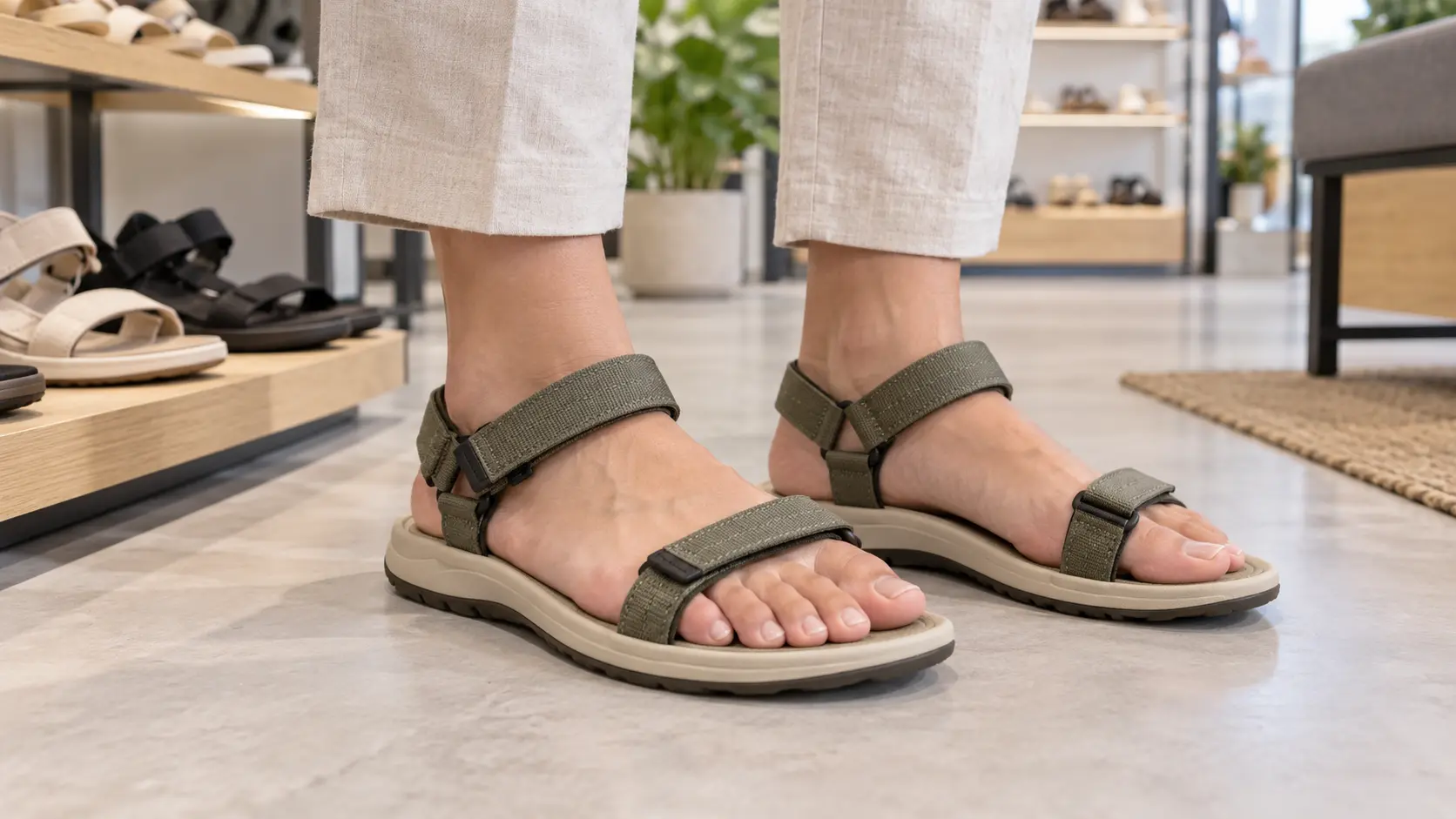
Stand with your weight on both feet. Your toes and heel should rest within the footbed rather than hanging over its edges. Check that the widest part of your foot has enough room and that the shape does not press an edge into your skin. Use both sandals, since your feet may differ slightly in size.
Size labels vary. A familiar number does not establish that a new brand or model will fit, and a narrow footbed may be the wrong shape even in a larger size. If a raised contour presses sharply beneath your arch, do not assume it must be helpful. Choose a shape that feels comfortable through a walk.
Adjust Straps Without Pressure
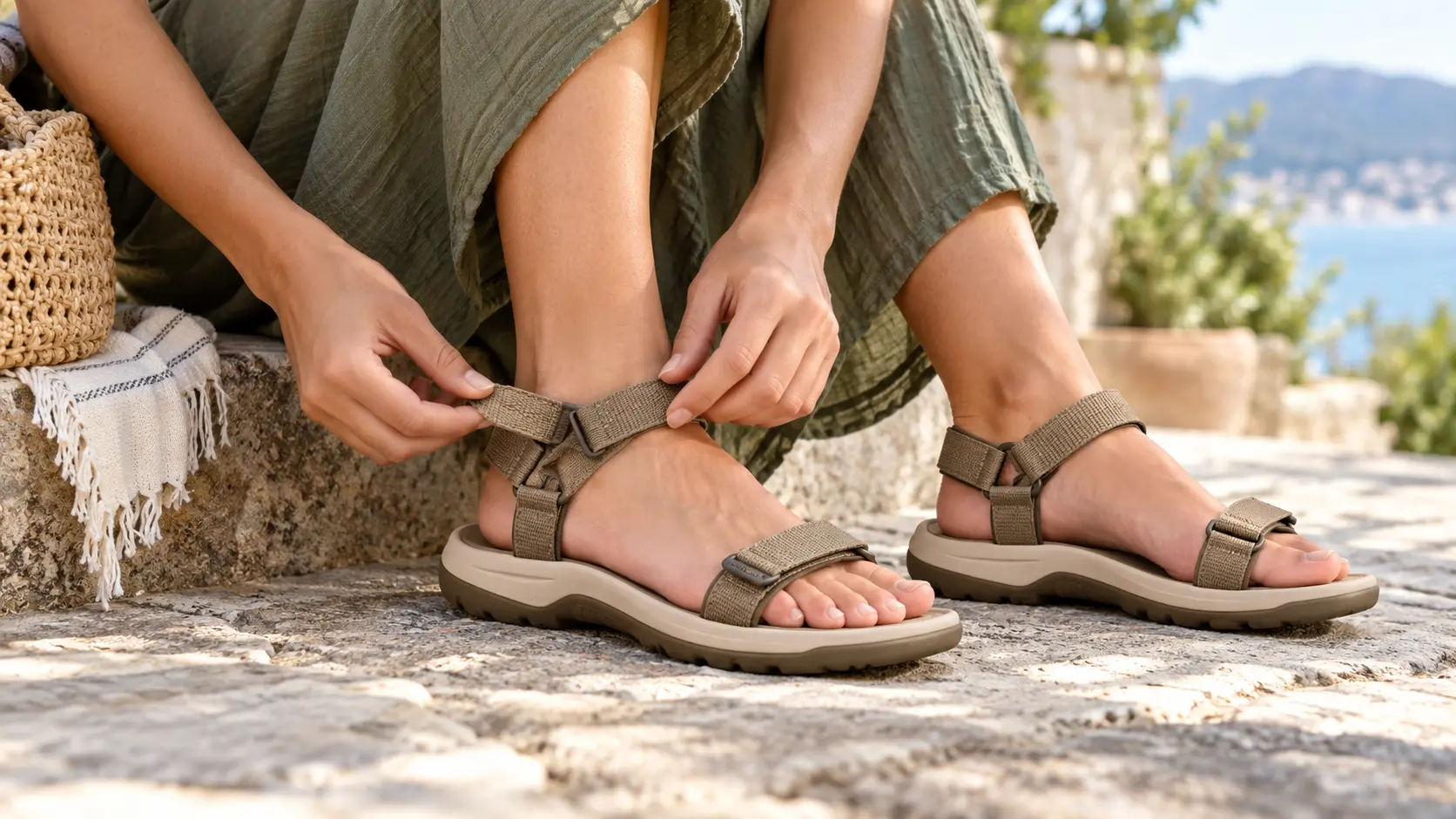
Adjustable straps help you tune the fit over the forefoot and around the ankle or heel. They should hold the sandal without cutting in. Walk and see whether the heel stays in place and the front of the foot slides forward. A loose sandal that needs constant toe-gripping is worth reconsidering for longer walks.
Look at buckles, hook-and-loop fastenings and stitching where they touch your skin. Check that the adjustment range works without leaving an awkward end or a buckle on a pressure point. Thin straps are not automatically uncomfortable, but several narrow edges can feel different after walking than they do in a seated try-on.
Take a Proper Walking Try-On

Walk for several minutes on a clean firm surface, turn and stop. Pay attention to rubbing near the heel or between the toes, the effort needed to keep the sandal on and any feeling that you must shorten your steps. A toe post is comfortable for some people and irritating for others; test the exact pair.
Softness is just one factor that affects comfort. Very soft foam may feel pleasant initially but still be unsteady for you, while a firmer footbed can work if its shape fits. Do not keep walking through pain in the hope of breaking the pair in. If you have persistent foot pain or reduced sensation, ask a qualified clinician for individual footwear advice.
Inspect the Sole for Your Route
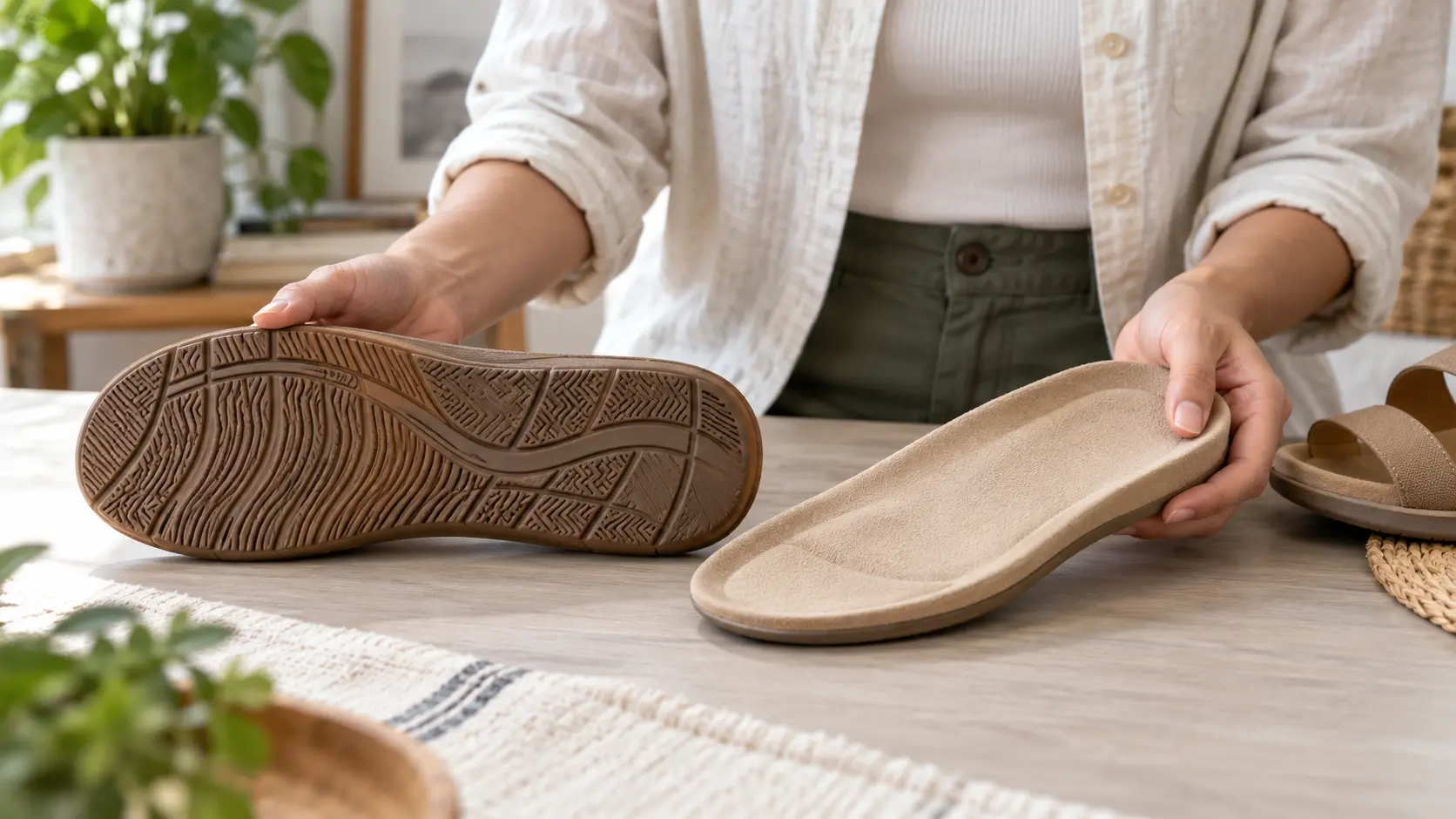
Look at the outsole and the surfaces you will use. A smooth sole can be a concern on wet tile or polished floors. Tread appearance and a non-slip label do not guarantee grip everywhere; floor material, water, dirt and wear all affect it. Walk carefully where you are unsure of the surface.
Check whether the sole bends comfortably near the front of your foot without feeling awkward. A thicker platform may add cushioning or height but can also change stability for you. Inspect the sole over time and reconsider the pair if tread is worn down, the footbed has collapsed or straps no longer hold the foot securely.
Consider Materials and Daily Care
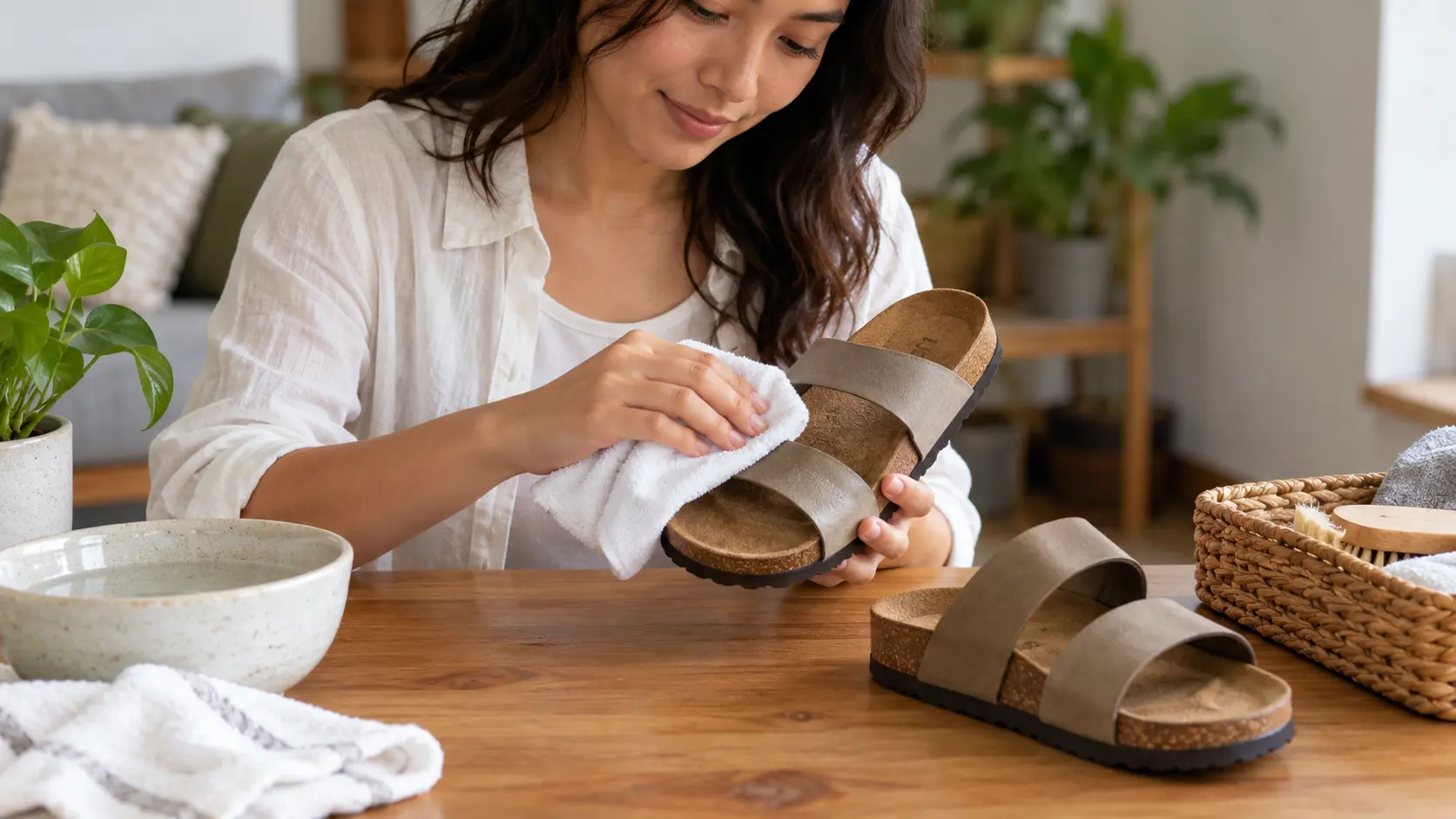
Read what the sandal is made from and how it should be cleaned. Leather, textile and molded synthetic styles can have different care needs. A sandal that tolerates splashes is not automatically suitable for prolonged soaking, and decorative parts or glued layers may need particular treatment.
Let a wet pair dry as directed before putting it away. Clean grit that can rub between straps and skin, and inspect the fastenings after frequent use. If you often walk in rain, consider how the footbed feels wet and whether another type of footwear would suit the route better. Sandals do not make a flooded walkway safe.
Shop Online With Fit in Mind
Use the model’s foot-length and width guidance rather than a generic conversion chart. Look at photos of the footbed shape, heel strap and adjustable areas. Comments about narrow fit or rubbing can help identify recurring concerns, but other people’s comfort is not a prediction for your feet.
Check return rules before ordering and try the pair on a clean indoor surface. Keep tags and packaging until you decide, following the seller’s conditions. A familiar-looking design can still fit differently, so give it the same attention you would give a new pair of closed shoes.
Priorities for Your Routine
Routine | Give extra attention to |
|---|---|
Short errands | Easy use with a secure comfortable fit |
Longer walking | Heel retention, adjustable straps and walking try-on |
Warm outdoor days | Comfortable materials and realistic care |
Wet smooth floors | Surface caution, outsole condition and alternative footwear |
Common Mistakes to Avoid
Letting toes or heels hang over the footbed.
Choosing soft foam as the only measure of comfort.
Keeping a loose pair on by gripping with the toes.
Expecting an arch-shaped footbed to suit every foot.
Assuming non-slip wording guarantees grip on wet tile.
Questions to Ask Before Buying
Do both feet sit comfortably inside the footbed?
Can I adjust the straps without pressure or rubbing?
Does the sandal stay on while I walk normally?
Will this style suit the distance and setting?
Can I clean it as directed and exchange a poor fit?
XploreSulit Summary
Choose the sandal that stays secure and feels comfortable during a real walk. Check footbed shape, strap pressure and sole condition together. If the pair rubs or makes you work to keep it on, try another design rather than relying on a comfort label.
Editorial Notes
This is an independently edited, criteria-based buying guide based on published guidance and buying considerations; it is not hands-on testing or a ranked product review. No product pictured has been tested by XploreSulit. Verify the exact model, material, dimensions, care, performance claim, seller and Philippine availability before adding named products or affiliate links.
Sources consulted in October 2026. Manufacturer guidance applies to that manufacturer’s products; it is not proof of performance for another brand.
Frequently Asked Questions
It can help hold the sandal on the foot. Check the fit and adjustment; the presence of a strap alone does not make every pair comfortable.
No. Comfort also depends on footbed shape, secure fit and stability. Compare several pairs while walking.
Use the exact fit guidance and try both feet. Extra length does not fix the wrong width or an insecure strap.
It depends on distance, surfaces, dress rules and comfort. For long or hazardous routes, another footwear type may be more suitable.
Related Buying Guides
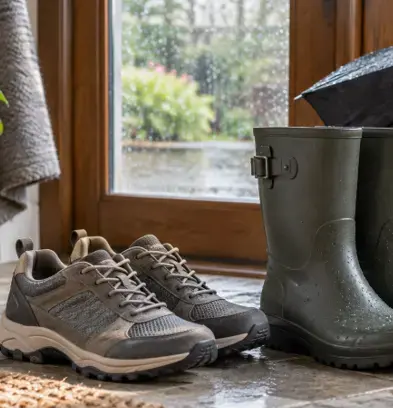
Waterproof Shoes for Rainy Commutes
Learn when waterproof shoes are useful, how they differ from water-resistant pairs and rain boots, and what to check for walking comfort and grip on a rainy commute.