
Waterproof Shoes for Rainy Commutes
Learn when waterproof shoes are useful, how they differ from water-resistant pairs and rain boots, and what to check for walking comfort and grip on a rainy commute.
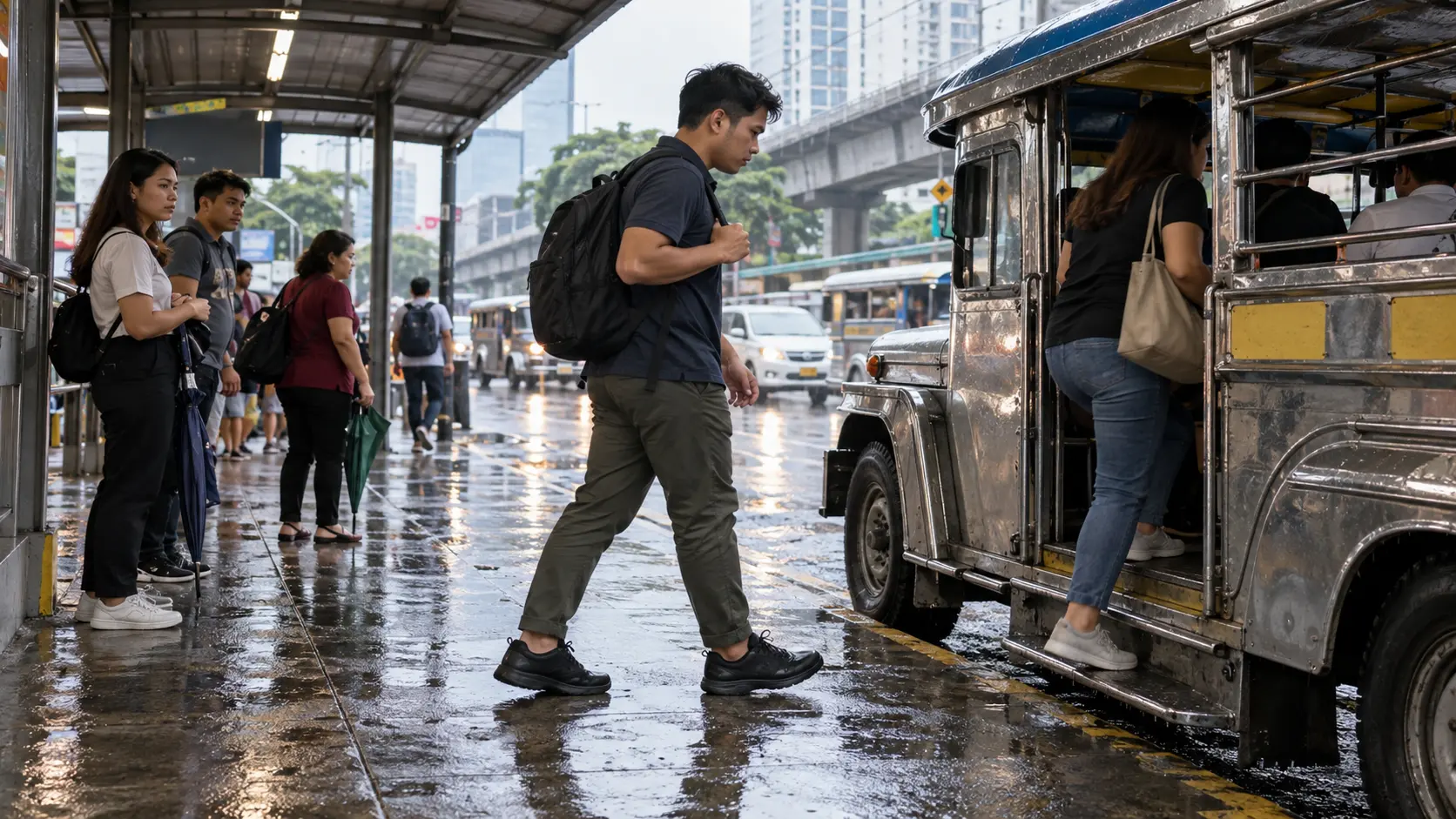
Image disclosure: All images, people, products, interfaces, places, and scenes in this article are AI-generated for illustration purposes only. They are original, fictional or generic concepts and do not represent actual individuals, commercial products, retailers, software interfaces, test results, medical results, camera samples, or real-world events.
Introduction
You leave home in dry weather, then rain starts while you are waiting for a jeepney or crossing the last stretch to work. By the time you arrive, your socks are damp. It is easy to see why a waterproof pair sounds appealing, especially during a Philippine rainy season.
The word “waterproof,” though, does not tell you everything. A low shoe can still let water in around the ankle. A pair that blocks rain can feel warm during a long, humid commute. And a waterproof upper says little about grip on a slippery tile floor. Think about the whole route before deciding what to buy.
Rainy-Day Shoe Factors
Factor | Why it matters | What to check |
Rain exposure | A few splashes differ from repeated long walks in rain. | Length of uncovered walk, puddles, alternate route. |
Protection | Different designs resist water in different ways. | Claim for whole shoe, membrane or coating, seams, collar. |
Fit | A wet commute still involves walking and standing. | Toe room, heel hold, socks, walking test. |
Grip | Waterproofing does not guarantee traction. | Outsole condition, tread, intended surface. |
Heat and care | Water can also come from sweat or over the collar. | Breathability, drying and cleaning instructions. |
Start With Your Route and the Kind of Rain
If most of your travel is under cover and you only cross a short open area, a comfortable water-resistant pair may be enough for light rain. If you walk longer in frequent rain, a shoe built with a waterproof lining or sealed construction may be worth considering. Someone who must step through deeper standing water has a different problem: a low-cut shoe may fill from above regardless of the fabric.
Do not plan a commute around walking through floodwater. The depth, current, open drains, and objects beneath the surface may not be visible. Take a safer route or wait for conditions to improve where possible. A change of shoes and dry socks can be more useful than forcing one pair to handle every part of the day.
Read Water-Resistant and Waterproof Claims Carefully
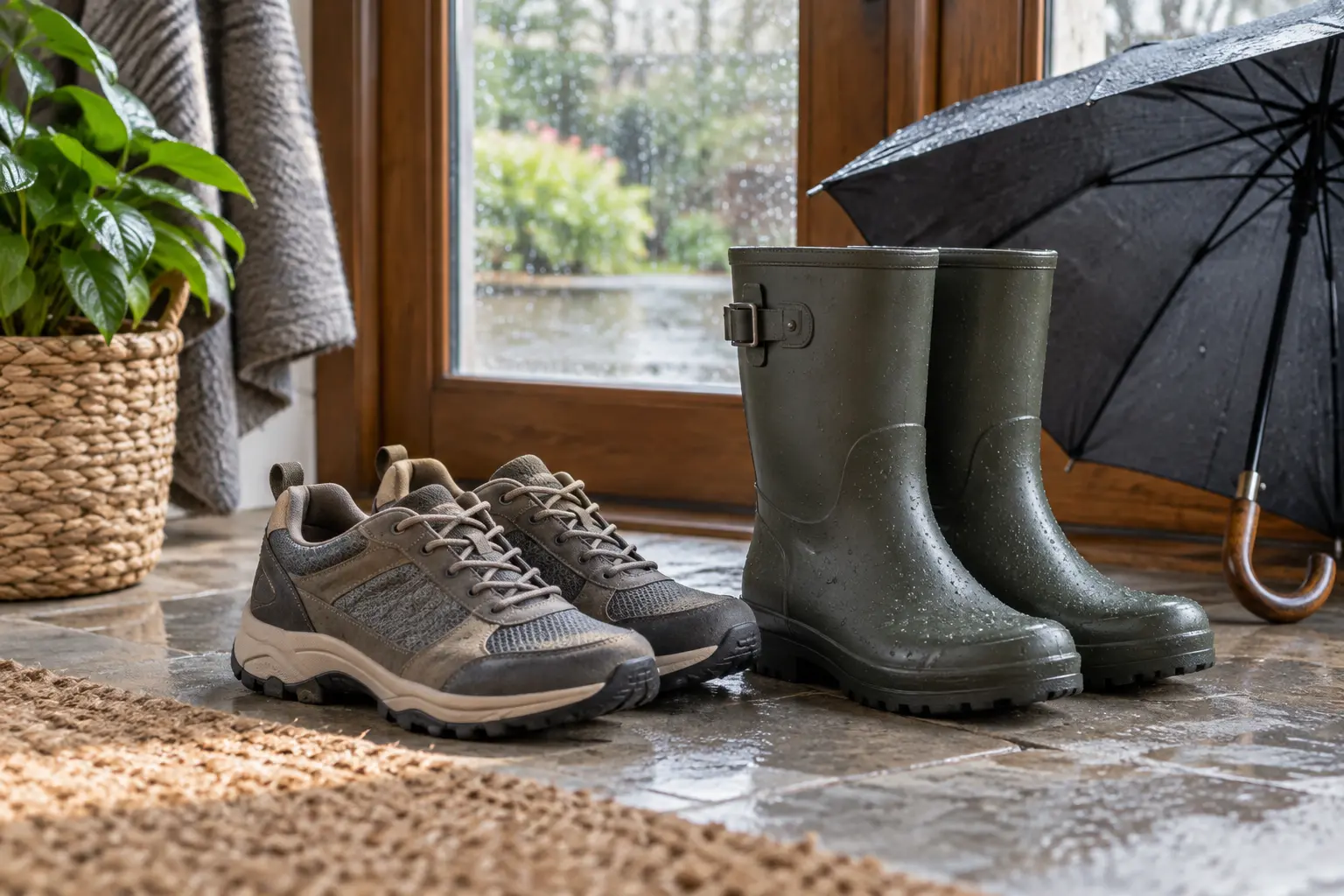
Water-resistant shoes may shed brief splashes and light rain but can soak through with sustained exposure. A waterproof shoe generally uses a design intended to block water through the upper, often with a membrane or more continuous construction. Check exactly what the maker says about the model and which parts of it are protected. A product listing that only names a coated upper does not explain the seams, tongue, or opening.
Even when the upper keeps rain out, water can run down your leg and enter at the collar. Tall boots protect higher up the leg but can be heavier or warmer and may feel less pleasant for long pavement walks. A shoe with a waterproof membrane may also dry more slowly after water gets inside. Match the design to the weather you meet most often.
Choose a Fit You Can Walk In
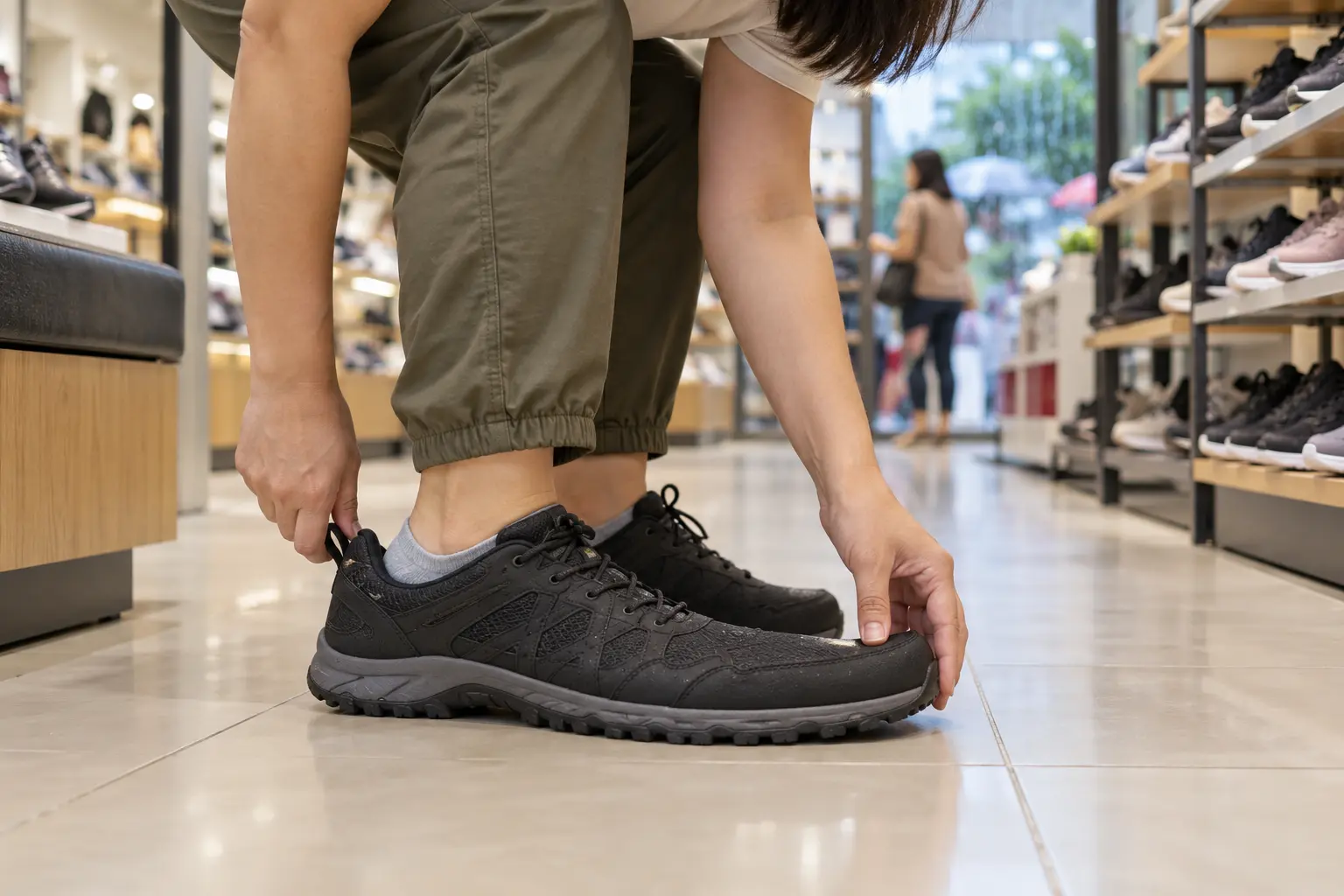
Try both shoes with the socks you would wear on rainy days. Stand up and make sure your toes can move without pressing into the front or top, while the heel stays secure. Walk around the shop, turn, and take a few stairs if allowed. A pair that pinches indoors is unlikely to become comfortable simply because it keeps rain out.
Check how the tongue and collar feel where they touch your foot. An opening that rubs or a foot that slides inside the shoe can make a long commute unpleasant. Shoe sizes and shapes differ across models, so use your usual size as a starting point, not a guarantee. If you use insoles, bring them when trying shoes on.
Check Grip Separately From Rain Protection
Wet tiles, smooth footbridges, painted crossings, and oily pavements can be slippery. Look at the outsole and its condition, but do not assume a deep-looking tread or a “non-slip” label will work equally well on every surface. Grip depends on the sole, floor, and what is on it; even a well-chosen shoe cannot remove the need to walk carefully.
For mostly paved commuting, a comfortable outsole designed for walking may make more sense than aggressive lugs meant for soft trails. Worn-down soles deserve attention. Be especially cautious stepping from a wet outdoor path onto a polished floor.
Think About Heat, Socks, and Drying
Waterproof materials can reduce airflow. That trade-off matters during a warm, humid commute or a full day in the same shoes. Try the pair for enough time to notice whether it feels overly warm. Comfortable socks and a change of dry socks may help with a long day, but socks cannot make a poorly fitting shoe comfortable.
After a wet trip, follow the maker’s care instructions. Remove loose dirt, open the shoe so air can circulate, and let it dry before storing it. Avoid direct high heat unless the manufacturer specifically permits it; it can damage some materials, adhesives, or finishes. If water has entered from above, take out removable insoles when the instructions allow to help them dry.
Which Type Suits Your Day?
Type | Usually suits | Watch for |
Water-resistant everyday shoe | Short exposure to light rain and splashes. | May soak through during sustained rain. |
Waterproof low-cut shoe | Regular rainy walks on routes without deep water. | Water entering above collar; warmth and slower drying. |
Mid- or high-cut rain boot | Greater splash exposure and short wet walks. | Fit, walking comfort, heat, and change of shoes indoors. |
Quick-drying non-waterproof pair | People who expect to get wet and can change or dry shoes. | Feet will get wet; assess route safety first. |
Buying Online Without Guessing
Check the maker’s exact wording on the shoe’s protection, not just a seller’s headline. Look at photos of the tongue, seams, collar height, and outsole. Compare your foot measurement with that specific model’s size chart. Read reviews for repeated fit or leakage concerns, while remembering that a buyer’s brief rainy walk is not a controlled water test.
Before ordering, confirm the seller, return window, and rules on indoor try-ons. When the shoes arrive, try both on with your commuting socks and walk indoors on a clean surface. Do not take them into the rain until you are sure the fit works and you know the return terms.
Common Mistakes to Avoid
Assuming every shoe described as waterproof can handle deep water or flooding.
Choosing a pair solely by its waterproof label while ignoring fit and outsole grip.
Expecting a low collar to block water running down the leg.
Buying a tight pair with the hope that it will stretch enough later.
Using a trail outsole as proof of grip on smooth wet tile.
Forgetting the heat and drying trade-offs during everyday wear.
Skipping the exact model details and return terms when buying online.
Questions to Ask Before Buying
How long am I actually exposed to rain on my usual route?
Is the whole shoe designed to keep water out, and under what conditions?
Can water enter from the collar or tongue on that route?
Does the pair fit securely and comfortably after several minutes of walking?
Is its outsole suitable for the surfaces I use most?
Will I need a separate dry pair or socks at school or work?
XploreSulit Summary
A waterproof shoe can help with ordinary rainy walks, provided it fits well and suits your route. Check the whole construction and the collar, then try the pair for walking comfort and consider its outsole separately. For deeper water or unsafe flooded streets, change the route or travel plan; the word “waterproof” on a shoebox is not a safety promise.
Frequently Asked Questions
No. A waterproof pair may offer stronger rain protection but can feel warmer and take longer to dry if water enters from above. For brief light rain, a comfortable water-resistant pair may suit you better.
Yes, if they fit and feel comfortable for your routine. Check whether the pair becomes too warm during long hours in your local weather and allow it to dry fully between uses.
Low-cut shoes can fill from the top. More importantly, floodwater can hide hazards. Avoid walking through it when possible; do not rely on footwear to make a flooded route safe.
Some may be comfortable for your route, while others can feel heavy, warm, or loose at the heel. Try them with your usual socks and walk for several minutes before deciding.
Look for a specific manufacturer claim and its intended surface, where available. No outsole grips every wet or contaminated floor equally. Inspect the sole for wear and walk carefully on uncertain surfaces.
Related Buying Guides
Finding Comfortable Sandals for Everyday Wear
Summary Choose everyday sandals by fit, secure straps and how they feel while walking, then consider the sole, materials and care.