
How to Choose the Right Wireless Earbuds
A reader-friendly guide to comparing wireless earbuds by sound, fit, call quality, battery life, noise control, connectivity, and after-sales support
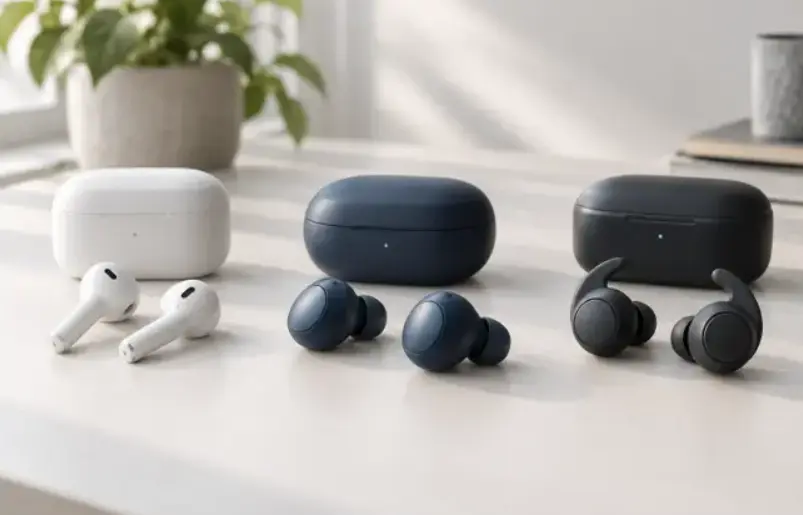
Image disclosure: Images and scenes in this article may be AI-generated for illustration purposes only. Any people, animals, places, products, interfaces, or events shown are fictional or generic and should not be interpreted as actual individuals, locations, commercial products, software interfaces, testing results, or real-world events.
Introduction
Two pairs of wireless earbuds can look almost identical on a shopping page and still behave very differently once you wear them. Fit affects comfort, bass, and isolation; microphone quality becomes obvious during a call; and an unstable connection can spoil an otherwise good pair. Think about your normal use first. A commuter riding a jeepney or bus may value noise control, while someone joining work calls from a laptop may care more about microphone clarity and easy device switching. Use those priorities to judge the specifications instead of paying for every advertised feature.
Use this guide to narrow the choices, then check the exact model, included ear tips, seller warranty, and return policy before paying.
At a Glance: Key Factors to Consider
Factor | Why It Matters | Quick Tip |
Sound Quality & Drivers | Determines clarity, bass response, and overall listening enjoyment | Trust reviews and ear-on tests over driver size alone |
Battery Life & Case | Affects how often you're tied to a charger | Check case capacity, not just earbud playtime |
Noise Cancellation | Shapes how usable they are in commutes or noisy offices | ANC quality varies a lot by price tier — test before assuming |
Fit & Comfort | A great-sounding earbud you can't wear for an hour is useless | Check how many ear-tip sizes are included |
Connectivity | Impacts stability, switching between devices, and latency in video/games | Look for Bluetooth 5.2+ and multipoint if you switch devices often |
- Sound Quality & Drivers
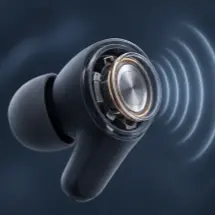
Sound quality depends on driver design, tuning, and a proper ear-tip seal.
What shapes the result
The driver is only one part of the sound. Brand tuning and the seal created by the ear tips also affect bass, voices, and treble, so a larger driver number does not automatically mean a better-sounding pair.
Why you will notice it
Sound preference is personal, but obvious problems such as harsh treble, muffled voices, or uncontrolled bass can become tiring during music, podcasts, and calls.
What to check before buying
Compare several independent reviews and pay attention to descriptions of vocals, bass, and treble. If a shop allows a hygienic demonstration, listen with familiar audio; otherwise, choose a seller with a clear return policy.
XploreSulit recommendation
Our view: balanced tuning and a comfortable seal matter more than impressive-looking numbers. Model-specific reviews are more useful than driver size alone.
- Battery Life & Charging Case
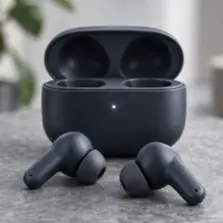
Compare single-charge playback with the additional power stored in the case.
How it works day to day
Two numbers matter here: how long the earbuds last on a single charge, and how many extra charges the case itself holds before it needs to be plugged in.
What shoppers often miss
A pair that lasts 6 hours per charge but has a case that only gives one extra charge behaves very differently from one with a case that gives four extra charges — even if both advertise similar total "battery life."
Before you order
Look past the headline number and check the product page or manual for per-charge time versus total time with the case included.
A practical choice
For commuting or work, choose enough single-charge playback to cover your usual day with a reasonable margin. Treat the case total as backup power, and remember that ANC, call time, volume, and battery age can shorten actual use.
- Noise Cancellation (ANC vs Passive)

Effective noise control depends on both electronic cancellation and passive isolation.
How the feature works
Active Noise Cancellation (ANC) uses microphones and electronics to cancel outside sound, while passive isolation just relies on the ear tips physically blocking noise.
Why it matters at home
Effective ANC can reduce steady sounds from buses, air-conditioning, and open offices. Results vary widely, though, and a secure passive seal may sometimes help more than weak budget ANC.
Details worth checking
Search for "[model] ANC review" specifically, since general reviews often gloss over how effective it really is in noisy environments.
XploreSulit recommendation
If your main use case is noisy commutes, prioritize a model with reviewed ANC performance over one that merely lists ANC as a feature.
- Fit & Comfort (Ear Tips / IPX Rating)
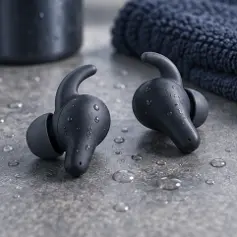
A secure fit and suitable sweat resistance matter for exercise and extended wear.
What daily use is like
Fit refers to how securely and comfortably the earbuds sit in your ear canal, and the IPX rating tells you how resistant they are to sweat and light rain.
Possible frustrations
Poor fit causes discomfort during long use and lets sound leak in and out, which undermines both audio quality and noise cancellation regardless of how good the drivers are.
Check before committing
Check how many ear-tip sizes are included in the box, and look for an IPX4 rating or higher if you plan to work out with them.
A practical rule
For exercise, look for a stated sweat-resistance rating that matches the manufacturer's permitted use. Water resistance is not waterproofing, and it does not automatically cover swimming or charging while wet.
- Connectivity & Codec Support

Stable Bluetooth and multipoint support make switching between devices easier.
Consider long-term ownership
This covers the Bluetooth version, supported audio codecs (like AAC or aptX), and whether the earbuds support "multipoint" pairing to two devices at once.
Why maintenance matters
Connection stability depends on the complete design, not the Bluetooth version alone. Multipoint can still be valuable because it reduces manual reconnecting when you move between a phone and a laptop.
Check Philippine availability
Check the spec sheet for the Bluetooth version number and whether "multipoint" is explicitly listed.
What offers lasting value
For long-term convenience, confirm stable model-specific performance and device compatibility. Prioritize multipoint if you regularly switch between a phone and a laptop, but do not treat a newer Bluetooth number as a guarantee of better range or sound.
Recommended By Use Case
If you're commuting daily
Prioritize ANC quality and total battery life (earbuds + case) over premium sound tuning. A secure fit also helps block noise passively when ANC is switched off to save battery.
If you're working out
Prioritize a secure fit and an IPX4+ rating over noise cancellation. Ear hooks or wing tips are worth considering if regular tips keep falling out during movement.
If you're on a tight budget
Prioritize comfortable fit and reliable connectivity over ANC. A pair with good passive isolation and stable Bluetooth will feel more reliable day-to-day than a cheap ANC implementation.
Common Mistakes to Avoid
Buying based on brand name or marketing photos alone — sound and fit vary widely within the same brand's lineup, so check model-specific reviews every time.
Judging battery life only by the earbud-only number and ignoring what the charging case adds — this is the number that determines how often you'll actually need to plug in.
Skipping the fit check — buying a pair with only one ear-tip size, or without checking return policies, often leads to earbuds that sit unused in a drawer.
Frequently Asked Questions
It depends on your environment. If you regularly commute on noisy transport or work in an open office, ANC makes a noticeable difference. If you mostly use earbuds at home or in quiet spaces, passive isolation from a good fit may be enough.
There is no fixed lifespan. Small lithium-ion batteries gradually lose capacity, and the rate depends on heat, charging habits, usage, and storage. Check the warranty and whether the brand offers service or replacement options.
Not always. Price often buys extra features like ANC, app customization, or premium materials rather than dramatically better raw sound quality. Mid-range pairs with good tuning can outperform pricier ones with weaker tuning.
Related Buying Guides
Choosing Headphones for Music Travel and Work
A guide to choosing headphones that feel comfortable and suit your needs, covering sound, fit, noise control, microphone quality, connectivity, battery life, durability, and everyday use.