
Choosing an Induction Cooker for Everyday Home Cooking
Choose an induction cooker by checking cookware compatibility, power levels, controls, ventilation, electrical requirements, safety, and daily cooking needs.
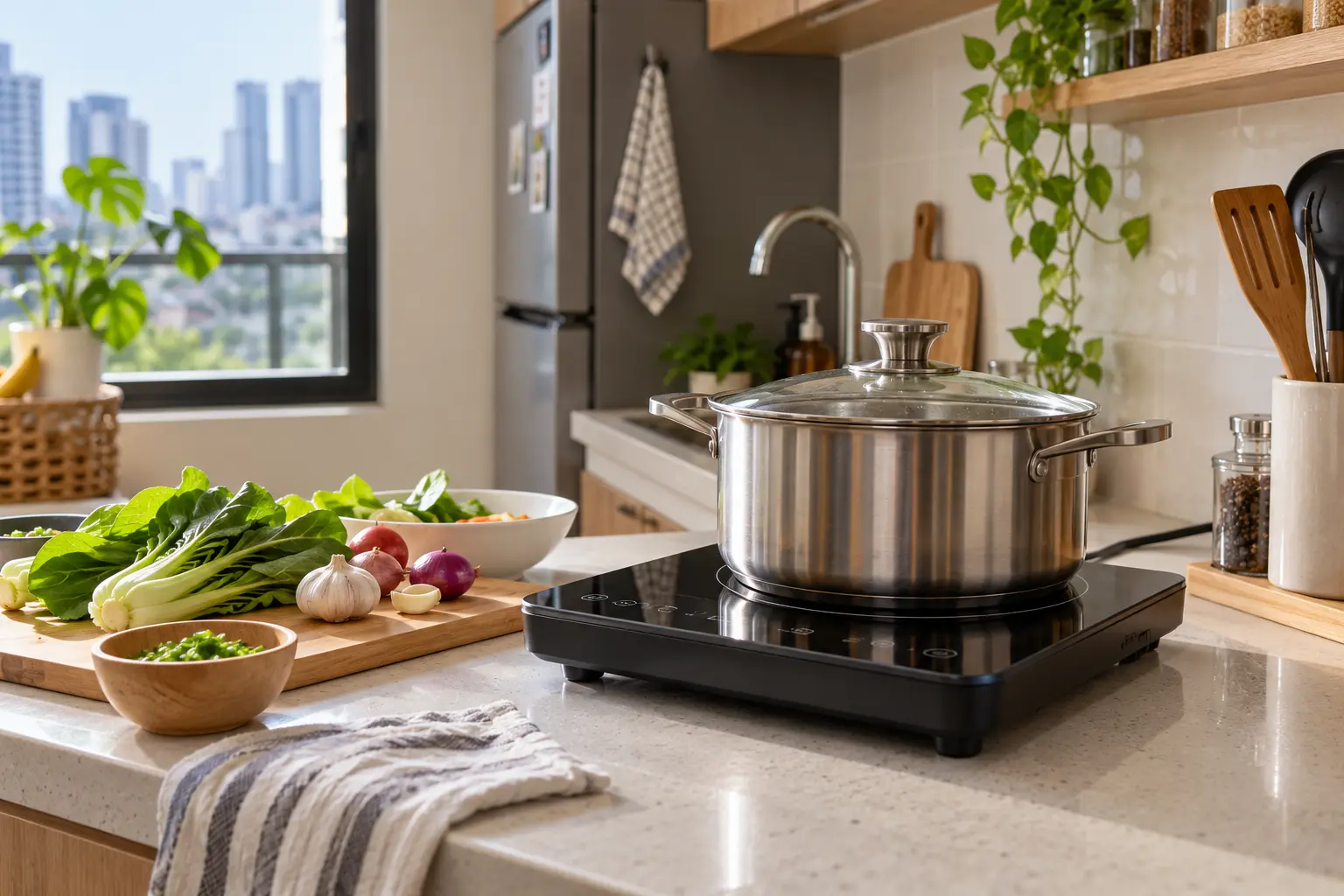
Image disclosure: All images in this article are AI-generated illustrations. Any people, products, interfaces, places, or scenes shown are fictional or generic and do not depict real individuals, specific commercial products or retailers, actual software interfaces, test or medical results, camera samples, or real-world events.
Introduction
A portable induction cooker can be useful in a condo, rental home, secondary kitchen, or household that wants a fast, easy-to-clean cooking surface. It heats compatible cookware through a magnetic field rather than heating an exposed coil first, but daily convenience still depends on the power supply, cookware, controls, and space around the unit.
Philippine buyers should pay particular attention to voltage, plug and outlet condition, circuit capacity, and the cookware already at home. A high wattage number may promise speed, yet low-power control, stable simmering, pan detection, and a responsive interface can matter more for everyday dishes such as lugaw, sinigang, sauces, and fried food.
At a Glance Key Factors to Consider
Factor | Why it matters | Quick tip |
|---|---|---|
Cookware compatibility | Induction needs a magnetic base with enough flat contact area. | Test existing pots with a magnet and check the stated pan-size range. |
Power and electrical supply | High settings can place a heavy load on an outlet or extension cord. | Use the required grounded outlet and follow the manual; avoid improvised adapters. |
Temperature and power control | Some units cycle strongly at low settings, affecting simmering. | Look for useful steps and controls that respond clearly. |
Cooking surface and size | A large pot can overhang a compact unit or block cooling vents. | Match the cooktop and stated load to the cookware you actually use. |
Safety features | Pan detection, overheat protection, child lock, and auto shutoff support safer use. | Confirm how each feature works instead of relying on icons. |
Cleaning and ventilation | The glass top wipes clean, but grease can enter vents. | Keep vents clear and let the unit cool before cleaning. |
Cookware compatibility
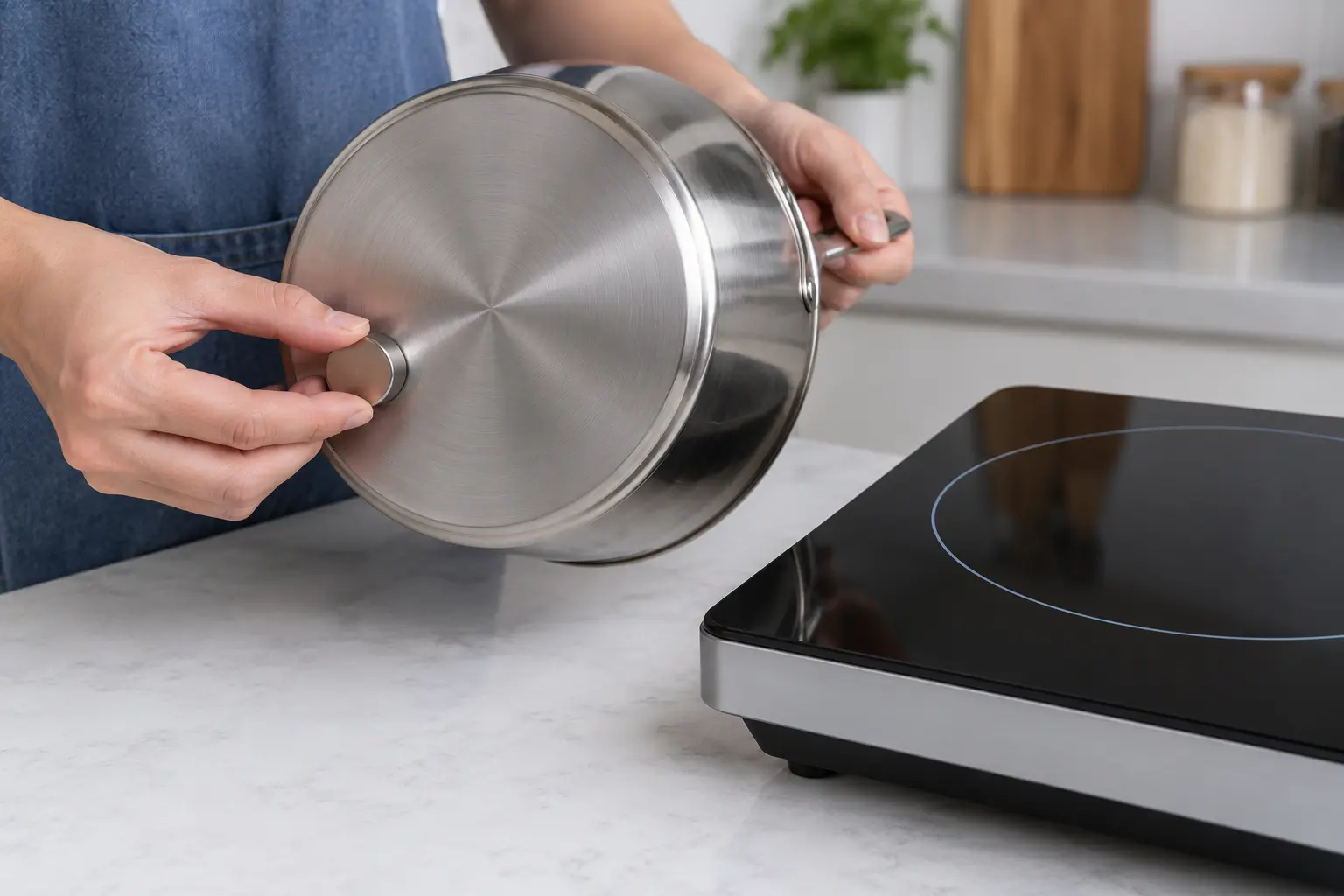
Induction needs a magnetic base with enough flat contact area. Test existing pots with a magnet and check the stated pan-size range.
Think about how this point affects an ordinary weekday rather than an ideal demonstration. The feature should suit the household's usual batch, room, schedule, or serving pattern without adding avoidable work.
Power and electrical supply
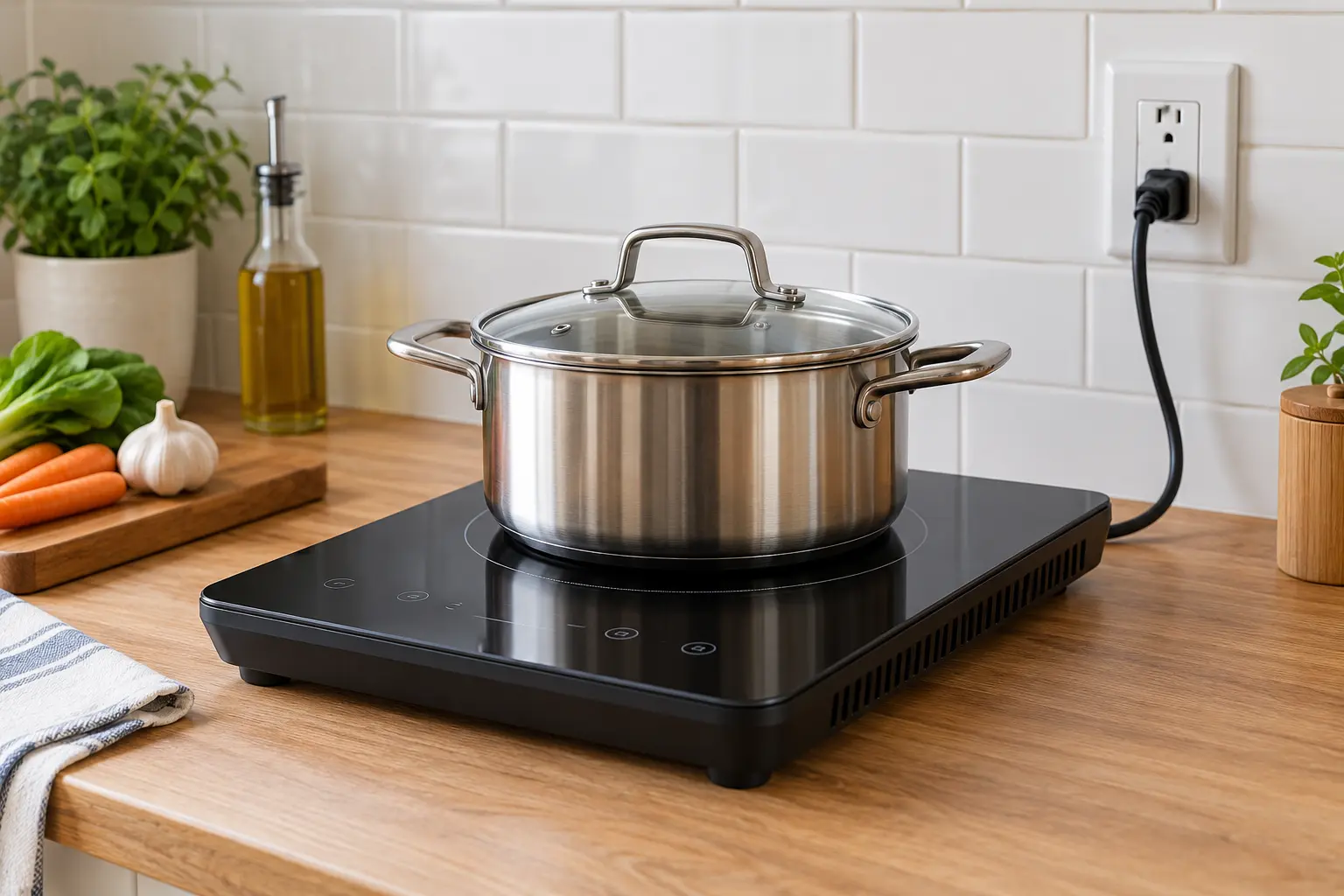
High settings can place a heavy load on an outlet or extension cord. Use the required grounded outlet and follow the manual; avoid improvised adapters.
Read the exact model manual or official specification so the limits, required accessories, and operating steps are understood before purchase.
Temperature and power control
Some units cycle strongly at low settings, affecting simmering. Look for useful steps and controls that respond clearly.
Picture where the appliance will be placed, who will operate it, and what must happen before and after every use. A convenient feature can become frustrating when setup, storage, or cleanup does not fit the home.
Cooking surface and size
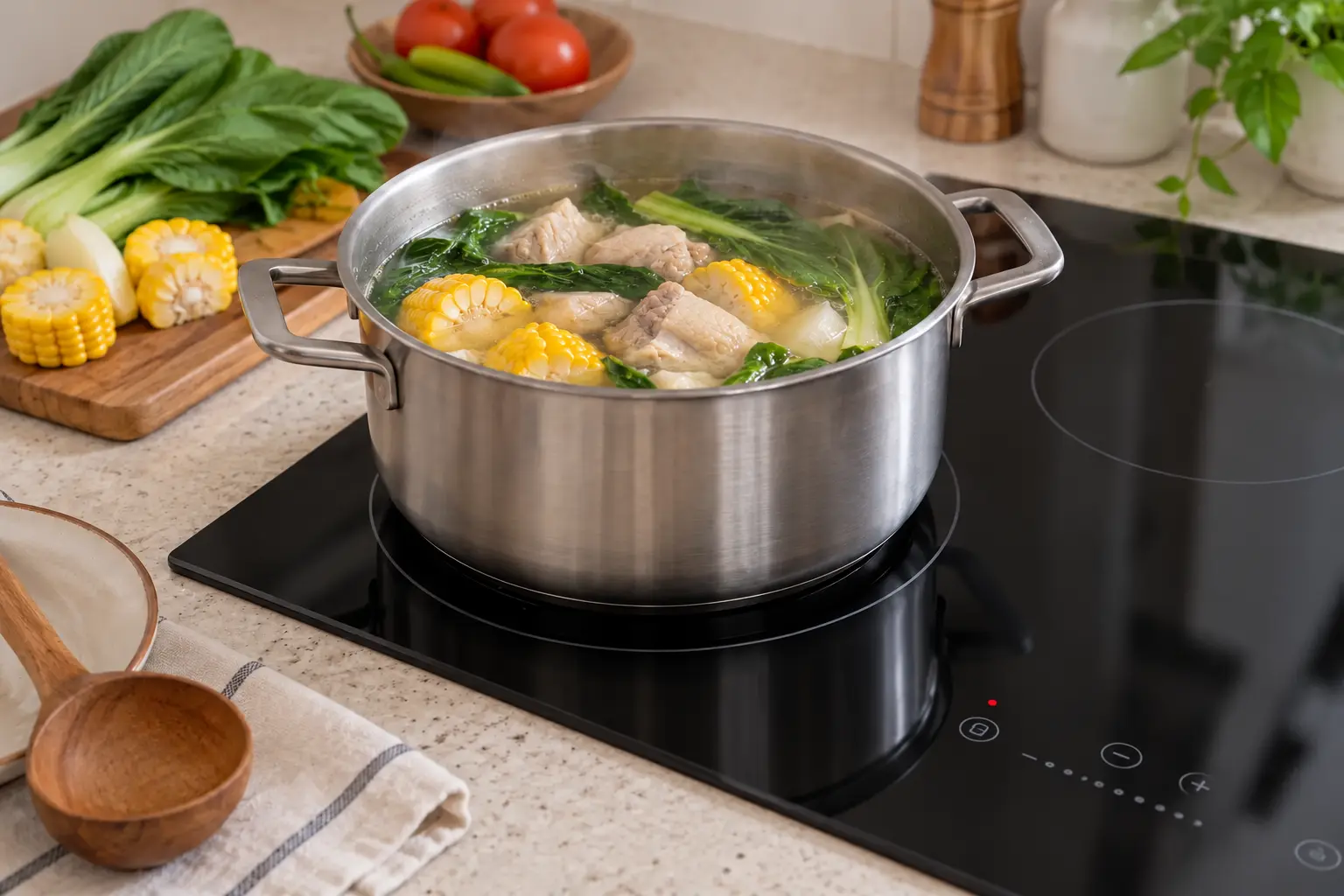
A large pot can overhang a compact unit or block cooling vents. Match the cooktop and stated load to the cookware you actually use.
This feature adds value only when it works at the setting the household will use regularly. Give more weight to clear controls and repeatable everyday operation than to a dramatic claim shown under special conditions.
Safety features
Pan detection, overheat protection, child lock, and auto shutoff support safer use. Confirm how each feature works instead of relying on icons.
Safety and maintenance belong in the buying decision, not only after delivery. Check the cleaning instructions, electrical requirements, ventilation or clearance, food-contact parts, and any warning that applies to the exact design.
Cleaning and ventilation
The glass top wipes clean, but grease can enter vents. Keep vents clear and let the unit cool before cleaning.
Finally, compare ownership rather than purchase price alone. Replacement parts, filters or accessories, electricity, water, cleaning effort, warranty coverage, and local service can change which model is genuinely sulit over time.
Recommended by Household Need
For condo cookingChoose a compact unit with manageable fan noise and a cord that reaches a proper outlet.
For backup cookingStore compatible cookware with the unit and remember that it still depends on electricity.
For frequent fryingCheck load stability, pan diameter, heat control, and surrounding splash space.
For older family membersPrioritize large labels, simple controls, stable cookware, and clear hot-surface warnings.
Common Mistakes to Avoid
Buying before checking cookware compatibility.
Using an overloaded extension cord.
Blocking the cooling fan or placing the unit on an unstable surface.
Judging performance only by maximum wattage.
Touching the glass immediately after cooking because there is no flame.
Ignoring local service and replacement-part support.
Questions to Ask Before Buying
Will my usual pots and pans work with this induction cooker?
Can my home’s electrical supply handle the cooker?
Are its power and temperature settings suitable for the meals I usually prepare?
Is the cooking surface large enough for my cookware and counter space?
Does it have the safety features I need, and will it be easy to clean?
Does it need extra space or ventilation around it?
Is the model compatible with Philippine voltage and plugs, and can I get local warranty support, repairs, and replacement parts?
XploreSulit Summary
Choose an induction cooker that fits your cookware, outlet, counter space, and cooking style. Useful low-to-medium control, a stable surface, clear safety functions, and dependable local support are more important than chasing the highest power figure.
Choose the simplest model that meets the real need and can be used, cleaned, stored, and maintained safely. Verify any model-specific specification or seller claim before adding a product or affiliate link to the published guide.
Frequently Asked Questions
No. Stainless steel construction varies. The base must be magnetic and suitable for the cooker’s size range.
No. The cookware can transfer heat back to the surface, so it may remain hot after cooking.
Some are sold, but they can reduce efficiency and introduce extra heat. Follow the cooker manufacturer’s guidance.
Not on its own. It needs electricity, so you’ll need a backup power source that’s rated to handle the cooker’s power requirements.
Related Buying Guides
Should You Consider a Low-Carb Rice Cooker?
A guide to low-carb rice cookers, including how starch-separation baskets work, realistic expectations, capacity, texture, cleaning, safety, and cost.
How to Choose the Right Multicooker for Your Home
A practical guide to choosing a multicooker by cooking method, usable capacity, pressure features, controls, cleaning effort, counter space, electrical requirements, and long-term upkeep.
Selecting a Coffee Maker That Fits Your Daily Routine
A practical guide to selecting a home coffee maker based on brewing method, suitable capacity, consistent coffee quality, everyday convenience, cleaning needs, and long-term cost.