
How to Choose the Right Air Fryer for Your Home
The best air fryer is not necessarily the one with the largest advertised capacity or the longest list of presets. This guide explains how to compare usable basket space, cooking formats, controls, cleaning requirements, counter space, electrical compatibility, safety, and warranty coverage.
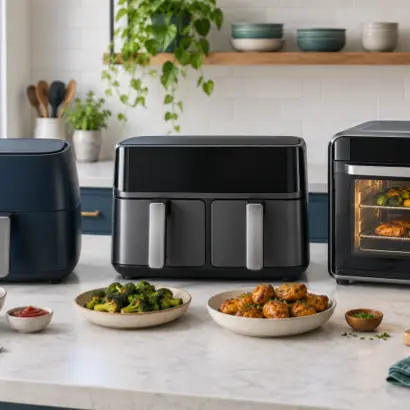
Image disclosure: Images and scenes in this article may be AI-generated for illustration purposes only. Any people, animals, places, products, interfaces, or events shown are fictional or generic and should not be interpreted as actual individuals, locations, commercial products, software interfaces, testing results, or real-world events.
Introduction
An air fryer deserves a place on your counter only if it makes everyday cooking easier. That may sound obvious, but it is easy to become distracted by oversized capacity claims, dozens of presets, app controls, and other features that look impressive in an advertisement.
Start with the meals you prepare regularly. Do you usually cook for one or two people, or do you need enough food for a family? Will you use the appliance for fries and snacks, complete meals, reheating leftovers, or occasional baking? The answers will help you decide whether you need a compact basket, two independent cooking zones, or a larger oven-style machine.
Basket shape matters too. A wide cooking surface often handles chicken pieces, fish fillets, and other flat foods better than a narrow but deeper basket with the same advertised capacity.
For homes in the Philippines, remember to check practical details such as 220-volt compatibility, plug type, rated wattage, ventilation clearance, and locally supported warranty service. These details are less exciting than cooking presets, but they can make a much bigger difference after the appliance arrives.
Key Factors to Consider
Factor | Why it matters | Practical tip |
Usable capacity | Food browns more evenly when hot air can circulate around it. | Look at basket width and cooking surface, not only the stated capacity in liters. |
Cooking format | Single-basket, dual-zone, and oven-style models work differently and occupy different amounts of space. | Match the design to the meals you prepare most often. |
Controls and temperature range | Clear controls make it easier to adjust cooking time and temperature. | Treat presets as conveniences rather than essential features. |
Cleaning and coating | An appliance that is difficult to clean may quickly become unpleasant to use. | Check whether the parts are removable, accessible, and easy to wash. |
Counter space, power, and safety | Air fryers need room to open, release heat, and connect to a suitable electrical outlet. | Measure the complete operating space, including ventilation and basket clearance. |
1. Usable Capacity
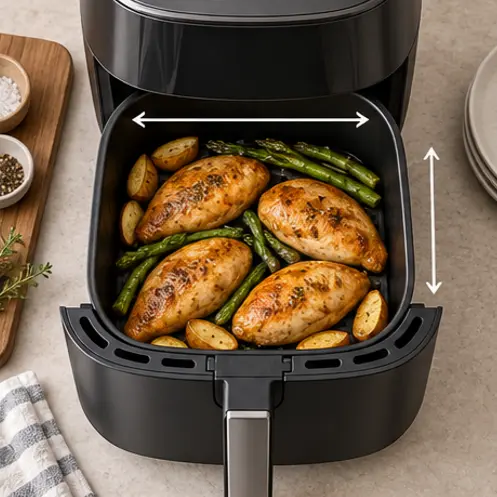
Air-fryer capacity is usually presented in liters, but that number does not tell the entire story. Two models can advertise a similar capacity while offering very different amounts of usable cooking space.
A deep basket may hold plenty of food by volume, but it can be inconvenient for meals that need to sit in a single layer. Fish fillets, chicken pieces, vegetables, and frozen snacks generally cook more evenly when they are spread across the basket instead of being piled on top of one another.
Before buying, look for the basket’s internal dimensions. Think about the portions you normally serve and the types of food you are likely to cook. If you have an opportunity to inspect the appliance in person, check whether the basket is wide enough for your usual meal without excessive stacking.
A compact air fryer can be perfectly suitable for one or two people. For a larger household, a wider basket or two cooking zones may reduce the need to prepare several batches. Buy for an ordinary weekday meal, however, not for the largest gathering you might host once or twice a year.
XploreSulit take: Usable surface area is usually more informative than the capacity printed on the box.
2. Choose a Format That Matches Your Meals
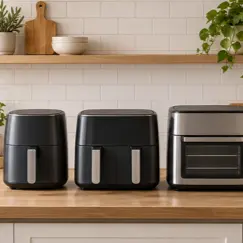
Air fryers generally come in three common formats: single-basket, dual-zone, and oven-style. None is automatically better than the others.
Single Basket Models
A single basket is often the simplest choice for everyday cooking. These units are usually compact, straightforward to operate, and easier to clean because they have fewer removable parts. They make sense if you generally prepare one type of food at a time or do not have much counter space.
Dual Zone Models
Dual-zone air fryers have two separate cooking compartments. They can be useful when a meal includes foods that need different temperatures or cooking times. The trade-off is size. Two baskets usually mean a wider appliance, more components to wash, and less uninterrupted cooking space for large individual items. Check whether each zone can operate independently and whether the machine can synchronize their finishing times.
Oven Style Models
Oven-style air fryers provide shelves or racks and may include functions such as roasting, baking, or rotisserie cooking. They can offer greater flexibility, but they also require more counter space and may take longer to clean. If you are interested in this format, consider whether you will genuinely use its additional functions. Also check how easily trays can be rotated, removed, washed, and stored.
A sensible choice: Pick a single basket for uncomplicated everyday cooking, dual zones for two foods requiring separate settings, and an oven-style model when the racks and added functions will be used regularly.
3. Favor Clear Controls Over a Long Preset List
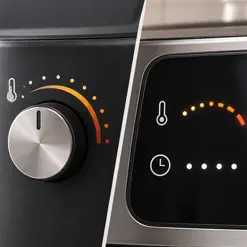
Preset buttons can be convenient, but they do not guarantee better cooking. Food thickness, portion size, starting temperature, and personal preference can all affect the time needed. For that reason, clear manual controls are especially valuable. You should be able to adjust the cooking time and temperature without working through confusing menus.
When comparing models, consider the following:
· Are the buttons and display easy to read?
· Can time and temperature be adjusted in useful increments?
· What happens when the basket is removed during cooking?
· Does the appliance pause automatically?
· Are the current settings retained when cooking resumes?
· If there are two zones, can each one be controlled independently?
Touchscreens may look modern, but physical knobs or simple buttons can sometimes be quicker to operate. The best interface is the one you can understand without repeatedly consulting the manual.
XploreSulit recommendation: Make dependable manual control the priority. Presets, Wi-Fi, and app features are worthwhile only when they solve a task you expect to perform regularly.
4. Consider the Cleaning Before the Cooking
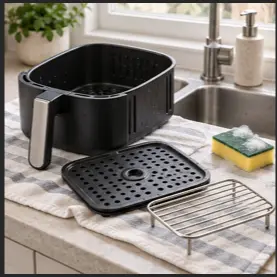
What it means. Removable baskets, trays, racks, and interior surfaces collect grease and food residue. Coatings help release food but require appropriate care.
Why it matters. A difficult-to-clean appliance is less likely to be used. Abrasive tools can damage coated surfaces, while hidden seams can trap residue.
How to check it. Check which parts detach, whether the manual permits dishwasher cleaning, and whether replacements are sold. Look for accessible corners and a basket that fits your sink.
Rule of thumb. Choose removable parts that are easy to wash by hand even if they are labeled dishwasher-safe. Follow the manufacturer's utensil and cleaning instructions to protect the coating.
5. Counter Space, Power, and Safety
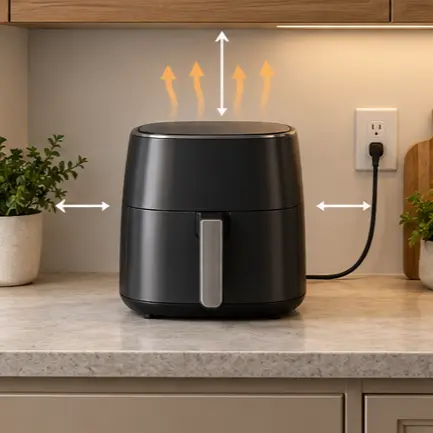
What it means. The appliance needs clearance for ventilation and a suitable electrical outlet. Exterior heat, handle design, stability, and automatic shutoff affect safe use.
Why it matters. A model that technically fits the counter may still block cabinets or overheat nearby surfaces. High-wattage appliances should not share overloaded extensions or unsuitable adapters.
How to check it. Measure width, depth, height, door or basket clearance, and the route of hot exhaust. Confirm voltage, plug type, rated wattage, cord length, safety certifications, and warranty from authorized local documentation.
Rule of thumb. Allow the clearance stated in the manual and plug the unit into a suitable wall outlet. Do not choose a model until you know where it will sit, vent, open, and cool safely.
Recommended by Use Case
For one or two people. Prioritize compact dimensions, a basket that fits your usual portions, and easy cleaning. Extra oven functions may not justify the counter space.
For a family. Prioritize usable cooking surface and batch size. A wide basket or dual-zone layout may be more practical than a tall basket with the same stated liters.
For varied meals. Prioritize flexible temperature controls, useful accessories, and a format suited to baking, reheating, or cooking two components. Confirm that every accessory is easy to clean and store.
Common Mistakes to Avoid
· Choosing by liters alone without checking the basket's width and usable cooking surface.
· Buying an oversized unit that does not fit the counter, cabinet clearance, sink, or storage area.
· Paying extra for presets or app control while overlooking cleaning, basket quality, and warranty.
· Using an unsuitable extension, blocking exhaust, or ignoring the manufacturer's clearance and electrical instructions.
Frequently Asked Questions
There is no universal liter figure because basket shapes and food types differ. Compare the actual cooking surface with your normal meal portions; a wide basket or dual-zone design can be more useful than a narrow, deep basket.
It can be worthwhile if you often cook two foods at different times or temperatures. If you normally cook one item or have limited counter space, a good single-basket model may be simpler and easier to clean.
It can handle many small portions quickly, but capacity, rack space, baking behavior, and cookware options differ. A larger oven remains more practical for big trays and some baking tasks.
They can save time, but you should still follow the manual because detergents, heat, and repeated washing may affect some finishes. Easy hand-washing and available replacement parts are also valuable.
Related Buying Guides
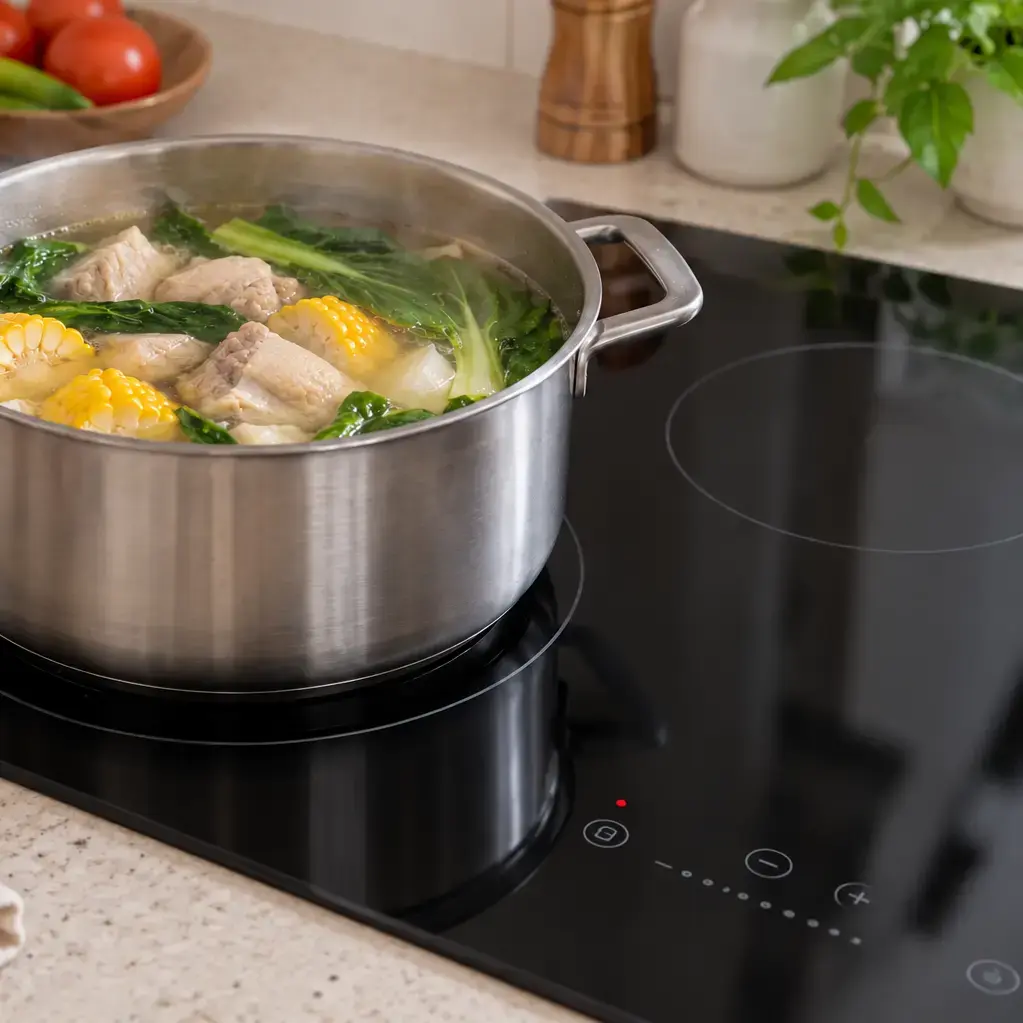
Choosing an Induction Cooker for Everyday Home Cooking
Choose an induction cooker by checking cookware compatibility, power levels, controls, ventilation, electrical requirements, safety, and daily cooking needs.
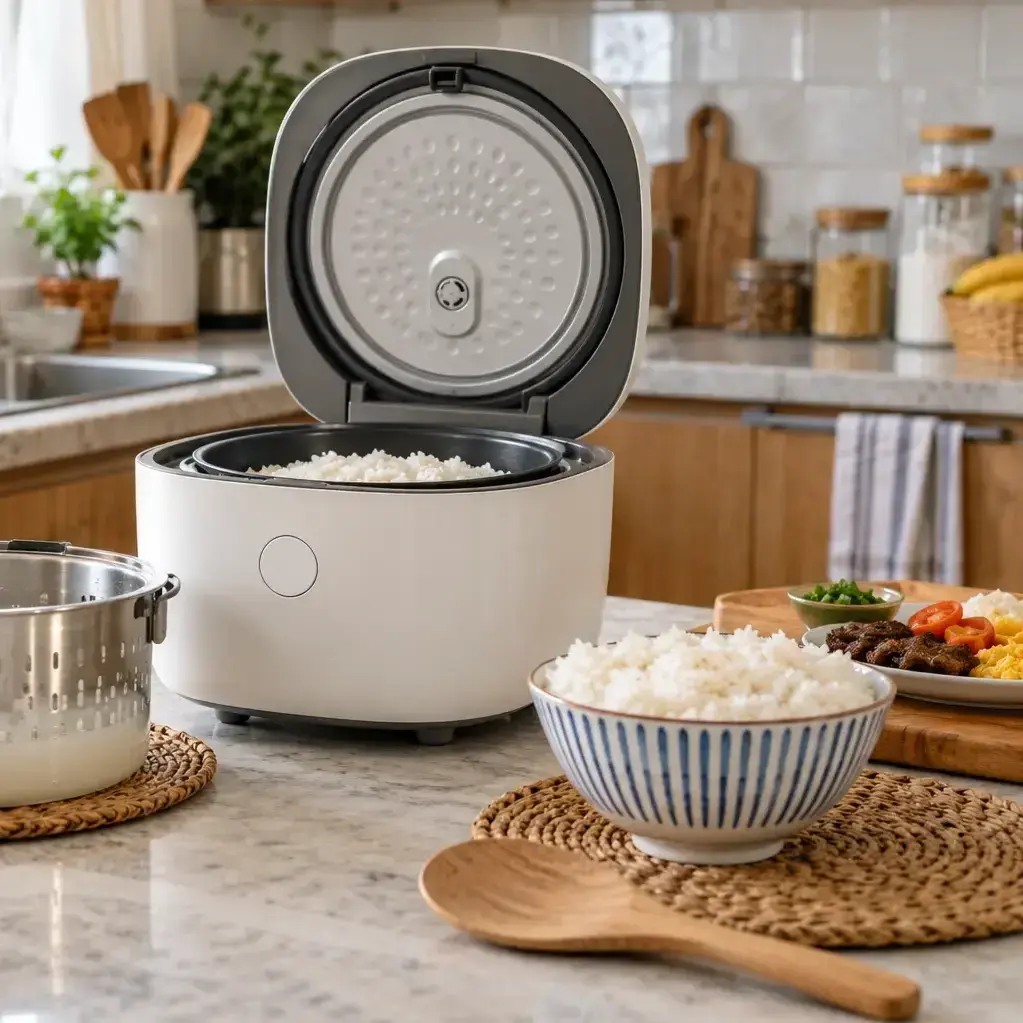
Should You Consider a Low-Carb Rice Cooker?
A guide to low-carb rice cookers, including how starch-separation baskets work, realistic expectations, capacity, texture, cleaning, safety, and cost.
How to Choose the Right Multicooker for Your Home
A practical guide to choosing a multicooker by cooking method, usable capacity, pressure features, controls, cleaning effort, counter space, electrical requirements, and long-term upkeep.